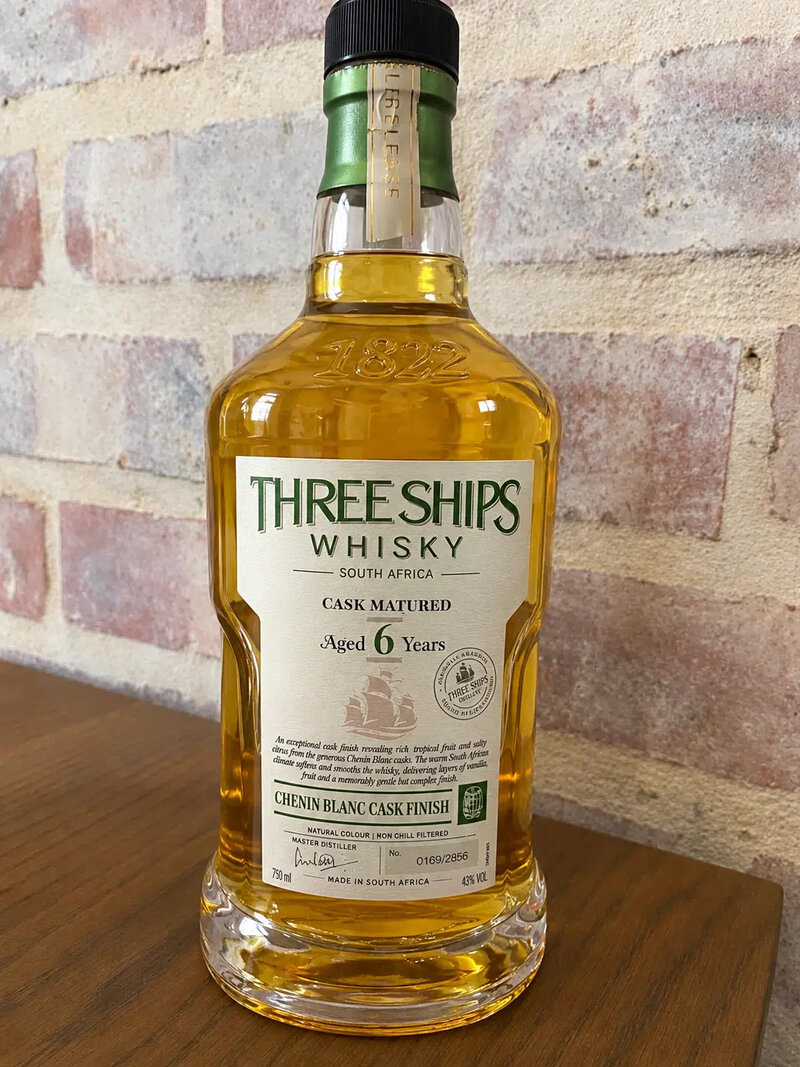
Three Ships gives drinkers a wine-finished malt whisky that heads in a fresher direction than the usual sherry or Port path. Made by South Africa's James Sedgwick Distillery, the Three Ships 6 Years Old Chenin Blanc Cask brings the country's best-known grape into the Master's Collection through time in Chenin Blanc barrels.
Built from column-distilled malt, it first sits in American oak and then spends 2 years in Chenin Blanc casks. That order keeps vanilla and honey in place, while the finish brings in a citrusy, lightly floral edge that makes the pour feel brisk rather than heavy.
This ensures that a bottle that can break up a shelf full of familiar fortified-wine finishes without turning into a niche curiosity. It gives everyday whisky buying a more summery option, especially for drinkers who want freshness and fruit without giving up oak structure.
Image Credit: Three Ships
Why This Trend Is Growing
- White-wine Cask Finishes
- Whisky aged in white-wine barrels introduces brighter fruit, floral notes and seasonal freshness to a category long dominated by richer fortified-wine finishes.
- Regional Grape Crossovers
- Local wine varietals such as Chenin Blanc create distinctive spirits expressions that connect national terroir with premium whisky differentiation.
- Lighter Whisky Profiles
- Consumer interest in fresher, citrus-led drams signals room for whiskies positioned beyond heavy, smoky or dessert-like flavor expectations.
Industries Being Reshaped
- Whisky
- Producers can expand premium portfolios through unconventional cask programs that modernize familiar oak-aged formats without alienating mainstream drinkers.
- Wine
- Barrel reuse and varietal storytelling extend the commercial value of wine regions by linking grape identity to adjacent luxury beverage categories.
- Premium Spirits Retail
- Retailers benefit from shelf offerings that bridge whisky and wine audiences, especially through approachable bottles with clear flavor-based differentiation.