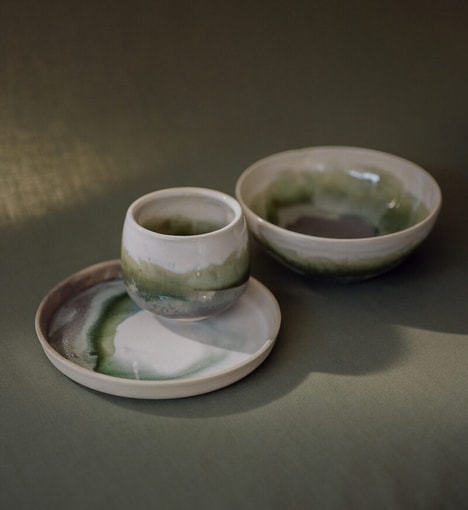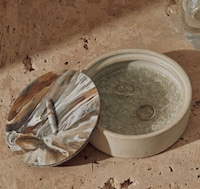


Zhekai Zhang — a graduate of the Royal College of Art in London, England, undertakes a rather experimental approach for the development of a ceramic homeware collection, dubbed 'Fabric Formula.'
Many industries, especially beauty and fashion businesses, are embracing the flaws that one is born with. Zhekai Zhang takes a similar approach but with ceramic homeware. The minimalist collection of teapots, jugs and cups is partially collapsing due to the young designer's formation technique and strategy. The white-glazed pottery is made with an experimental mold, where half of it is made from fabric. This instills a "partially unmolded" appearance in the ceramic homeware collection.
As Zhekai Zhang is rebelling against the practices and uniqueness-stifling aspects of mass production, the ceramic homeware presents an uncanny and attention-grabbing minimalist aesthetic.
What's Driving This Trend
- Embracing Flaws
- Disruptive innovation opportunity: Explore the acceptance of imperfections in various industries, like beauty and fashion, to create unique products.
- Experimental Mold Techniques
- Disruptive innovation opportunity: Develop innovative mold techniques in ceramics to create partially unmolded and visually intriguing homeware.
- Minimalist Aesthetic
- Disruptive innovation opportunity: Design minimalist homeware collections with collapsing elements to create striking and attention-grabbing products.
Who This Affects Most
- Beauty Industry
- Disruptive innovation opportunity: Embrace imperfections in beauty products and marketing to challenge traditional beauty standards and connect with a broader range of consumers.
- Fashion Industry
- Disruptive innovation opportunity: Integrate imperfections into fashion designs and manufacturing processes to create unique and personalized garments that stand out in the market.
- Ceramics Industry
- Disruptive innovation opportunity: Experiment with fabric-infused mold techniques in ceramics to create visually captivating and unconventional homeware collections.