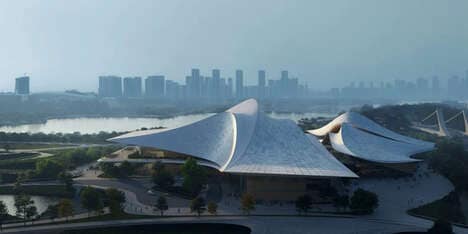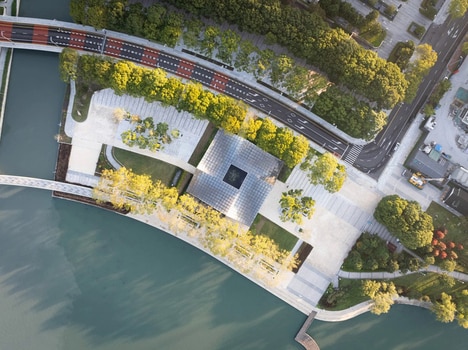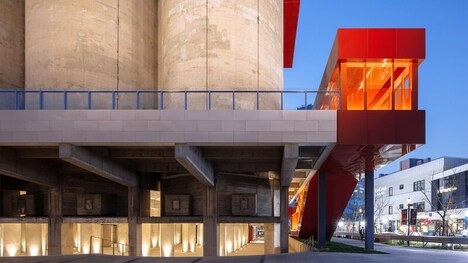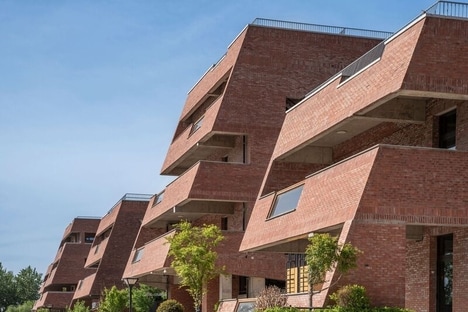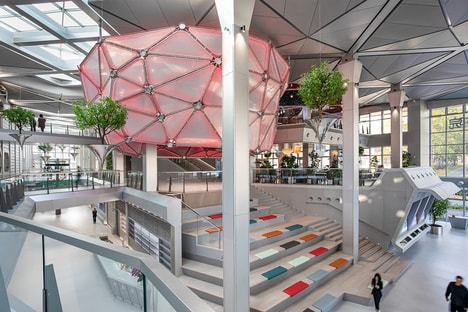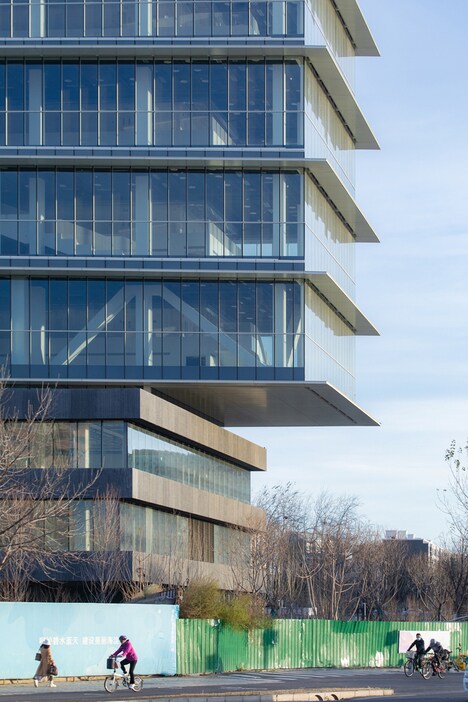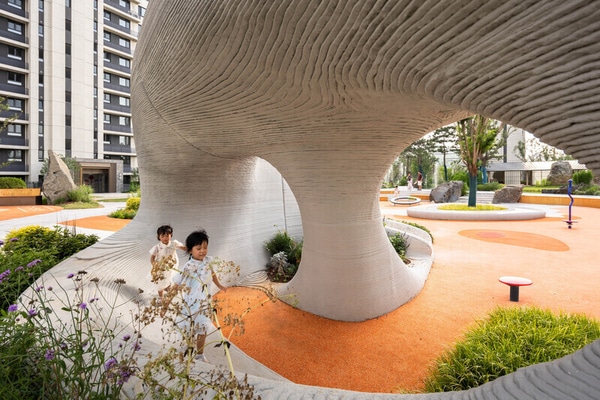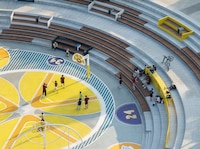
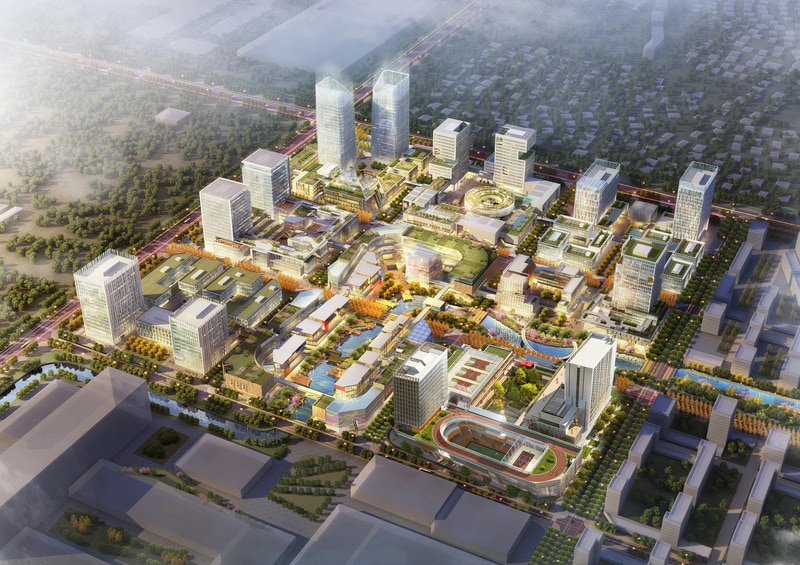
The Shanghai Pinghe School Jinding Campus, designed by c+d studio, is an educational facility situated within a high-density urban central business district. The architectural concept reinterprets the campus not as an isolated enclave but as an integrated public forum, using the metaphor of a 'theater' to describe its relationship with the city.
c+d studio's design for the Shanghai Pinghe School Jinding Campus incorporates two central communal spaces termed 'theaters' — one focused on academic activities, organized around a library and garden, and another dedicated to physical education and performances, centered on a sunken sports field. The complex layout is intended to support a variety of learning scenarios and foster interaction. Another key objective was to create a permeable institution that allows for potential shared use with the surrounding community.
Image Credit: c+d studio
What Makes This Trend Stand Out
- Integrated Public Forums
- Educational facilities designed as open forums rather than isolated institutes are fostering community engagement in urban areas.
- Multi-functional Urban Spaces
- The concept of multi-functional urban spaces, combining educational, recreational, and public-use areas, is reshaping the traditional school campus model.
- Permeable Campus Design
- The shift towards permeable campus designs, which merge educational spaces with community access, is redefining how schools interact with their urban environments.
Sectors Adopting This
- Educational Architecture
- Innovative architectural designs in the educational sector are redefining the function and interaction of learning spaces within high-density urban areas.
- Urban Development
- Urban development is embracing mixed-use facilities that incorporate educational, recreational, and public spaces to enhance community connectivity.
- Recreational and Sports Facilities
- The integration of sports and recreational facilities within educational campuses is transforming traditional approaches to school and community interaction.