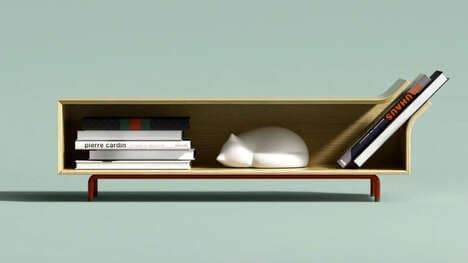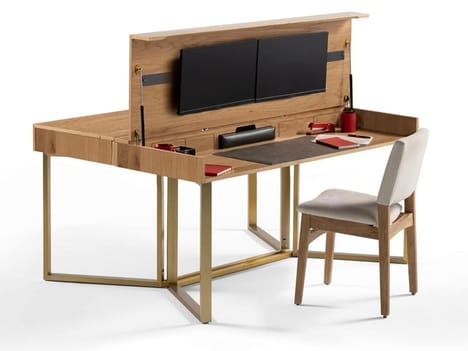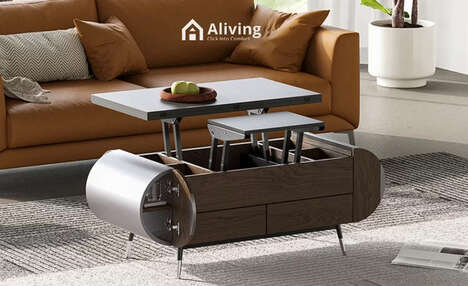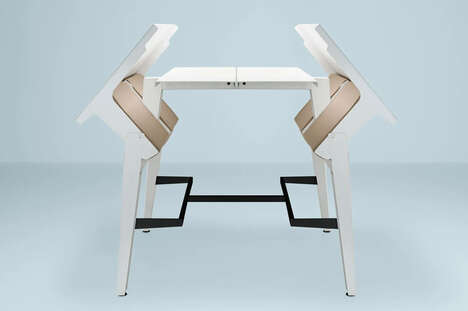


Ideally, a piece of furniture should be as flexible as the space in which it sits. The Cargo Coffee Table was conceived as a clever solution that's capable of adjusting to fit a variety of different rooms and a range of requirements in adaptable areas of the home.
Frederic Saulou's object is a long aluminum box, powder-coated in a minimal white and lacking several sections of its six faces. The rectangular openings reveal a red container fit snugly inside of it with a continuous top and a square gap in its side. Complete with a handle, this compartment can be slid straight out like a giant drawer, lengthening the size of the Cargo Coffee Table and producing storage space. It can also expand width-wise if the internal case is swiveled laterally.
Why This Trend Is Growing
- Adaptable Furniture
- Opportunity to create more multi-functional and flexible furniture pieces to meet the varied spatial requirements of living spaces.
- Modular Design
- Incorporating modular design with removable or adjustable parts to create customizable furniture solutions that can adapt to changing needs over time.
- Space-saving Furniture
- Designing furniture that can transform or be easily stored away to create more space in smaller living areas or shared living spaces.
Industries Being Reshaped
- Furniture Industry
- Creating more versatile, adaptive and customizable furniture options to cater to the evolving spatial requirements of consumers.
- Interior Design Industry
- Integrating more adaptable and space-saving furniture solutions into interior design plans to maximize the use of smaller living areas or shared living spaces.
- Architecture Industry
- Incorporating more modular and adaptable furniture solutions into architectural designs to meet the changing spatial requirements of modern living spaces.