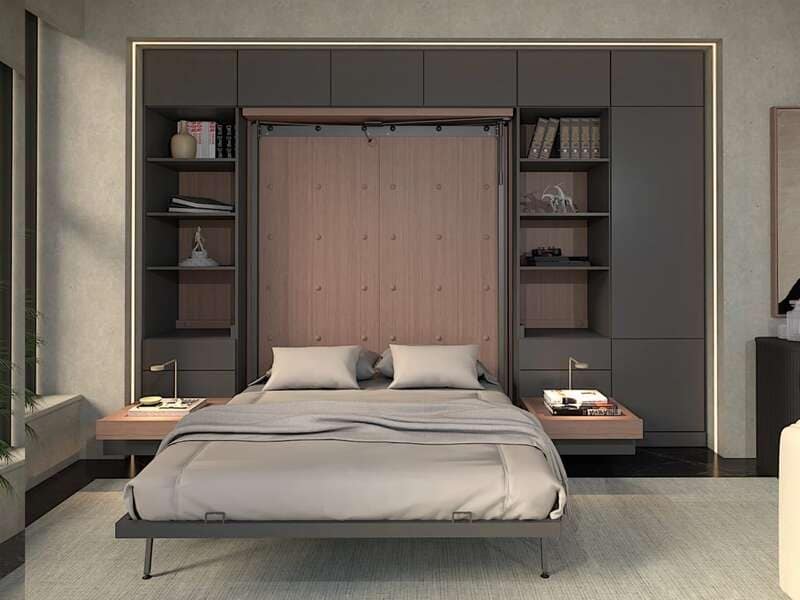
The Expand Furniture collection focuses on adaptable designs that transform to suit multiple uses without compromising aesthetics. For example, one piece is the Expanse Inverse wall bed, which mounts at headboard height, eliminating bulky cabinetry and allowing integration with windows and architectural features. Another key design is the Box Coffee Curve coffee table, crafted from fluted oak that raises in height and extends in length to function as a dining table for up to twelve, while neatly concealing its extension leaves.
These pieces reflect the company’s philosophy of furniture serving how people live rather than forcing homes to adapt to furniture. Many models underwent years of development based on customer feedback, focusing on engineering, craftsmanship, and spatial efficiency. The pricing reflects this complexity, but the value proposition lies in reclaiming usable space and merging design quality with functional versatility.
Yanko Design
Image Credit: Expand Furniture
What's Driving This Trend
- Transformative Interior Design
- Adaptable furniture systems like wall beds and expandable tables are at the forefront of a new wave in interior design, allowing spaces to transform seamlessly based on the user’s needs.
- Space-saving Innovations
- The move towards multifunctional furniture designs demonstrates a growing trend in maximizing usable space in increasingly compact living environments.
- Consumer-centric Product Development
- Furniture design driven by customer feedback exemplifies a shift towards consumer-centric innovation, where product iterations closely align with real-world usability and preferences.
Who This Affects Most
- Home Furnishings
- The home furnishings sector is experiencing transformation through furniture that adapts to various uses, catering to consumer demand for versatility.
- Architecture and Interior Design
- Architects and interior designers can harness adaptive furniture to create more dynamic living spaces that integrate seamlessly with structural elements.
- Engineering and Craftsmanship
- Advancements in engineering and craftsmanship are pivotal to developing multifunctional furniture that prioritizes spatial efficiency without sacrificing aesthetics.