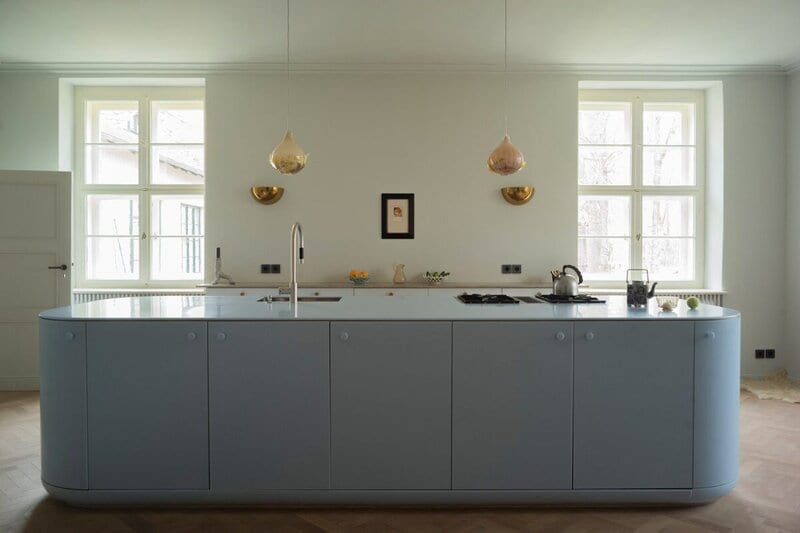
The Brandenburg country house is a 700-square-meter Wilhelminian residence renovated by Ænsemble following structural interventions by Söllner Wagner Architekten. Purchased by a family of artists after falling into disrepair, the listed home retains its original architectural features while introducing contemporary interior elements that remain visually distinct from the historic fabric. A relocated kitchen now occupies a larger ground-floor room, anchored by a sky-blue Corian island with an integrated sink, cooktop, and storage, while the former kitchen has been converted into a den enclosed by curved fluted pink paneling and a built-in sofa bed.
Colorful built-in furnishings define the updated interiors, including deep-blue cabinetry, a crimson salon sofa, and sea-green corduroy window seats that contrast with the pale historic shell. The reconfigured first floor, once used as staff quarters, now contains multiple bedrooms with en-suite bathrooms finished in terrazzo surfaces and black fixtures. Additional details include ceramic cabinet handles molded from nuts and leaves collected on the property
Image Credit: Jonas Lindstroem
What Makes This Trend Stand Out
- Contrasting Heritage Interiors
- Historic homes are becoming canvases for visibly modern interventions, creating market space for design systems that preserve architectural integrity while signaling contemporary identity.
- Color-drenched Built-ins
- Bold integrated furniture and saturated cabinetry are reframing renovation as a functional art practice, opening potential for customizable millwork, modular storage, and expressive material palettes.
- Site-inspired Craft Details
- Locally sourced motifs such as molded botanical hardware are elevating personalization in interiors, suggesting new value in artisanal components that connect homes to their surrounding landscape.
Sectors Adopting This
- Residential Architecture
- Listed-home renovations are expanding demand for sensitive spatial reconfiguration that balances preservation rules with modern family living.
- Interior Design
- Distinct contemporary finishes inside historic shells are shifting client expectations toward layered aesthetics, bespoke furnishings, and narrative-driven rooms.
- Home Furnishings
- Integrated sofas, window seats, cabinetry, and specialty surfaces are creating opportunities for furniture brands to merge utility, customization, and architectural permanence.