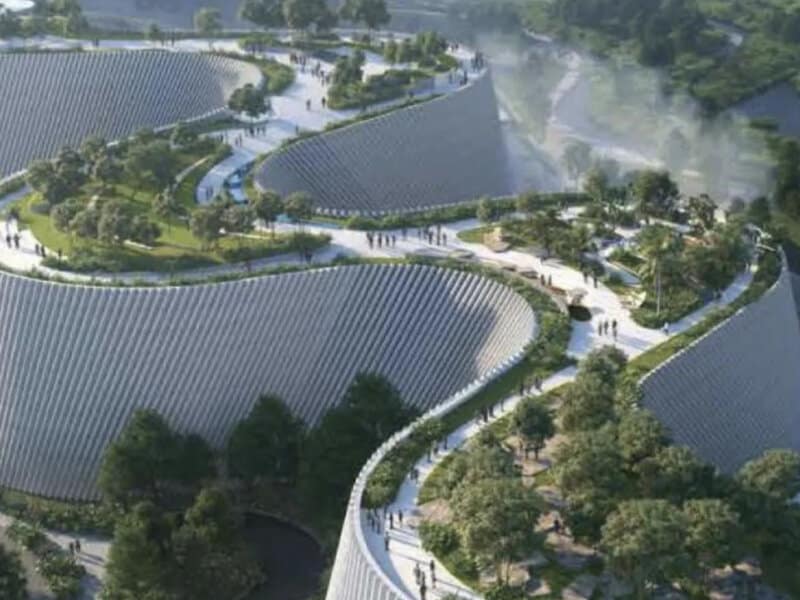
The Shenzhen Natural History Museum spans 105,300 square meters and opened on July 28, 2026, beside Yanzi Lake in Shenzhen's Pingshan District. Designed by 3XN, B+H Architects, and Zhubo Design, the museum is organized around the concept of "Delta," with sloping roofs, planted terraces, and granite-clad surfaces that reference the surrounding river landscape. Five cone-shaped volumes structure the principal exhibition halls, creating interconnected galleries, atriums, terraces, and framed views throughout the building.
The museum contains eight themed exhibition halls exploring 4.6 billion years of Earth's history, from the origins of the universe to the ecosystems of southern China. Exhibition designers Atelier Brückner and Museum Studio integrated scientific specimens, large-scale installations, and multimedia displays within the curved architectural spaces. B+H also designed a publicly accessible rooftop landscape featuring viewing terraces, themed planting zones, and gathering spaces that connect the museum with nearby wetlands and Yanzi Lake.
Image Credit: 3XN
What's Driving This Trend
- Landscape-integrated Museums
- Cultural buildings that merge planted roofs, terraces, and natural landforms create new possibilities for destination architecture that functions as both exhibition space and public landscape.
- Immersive Science Storytelling
- Multimedia installations, large-scale specimens, and spatially choreographed galleries point to growth in museum experiences that translate complex scientific timelines into accessible public engagement.
- Rooftop Public Realms
- Accessible roof landscapes are redefining institutional design by turning underused building surfaces into civic gathering areas, ecological connectors, and scenic visitor amenities.
Who This Affects Most
- Architecture
- Organic forms, terrain-inspired materials, and interconnected interior volumes signal demand for landmark buildings that express local ecology through distinctive structural identity.
- Museum Design
- Curved galleries, themed halls, and integrated media environments are expanding the role of exhibition design in shaping educational, sensory, and narrative-driven visitor journeys.
- Urban Planning
- Museums positioned beside lakes, wetlands, and public green space demonstrate how cultural infrastructure can support district-level placemaking, tourism, and environmental connectivity.