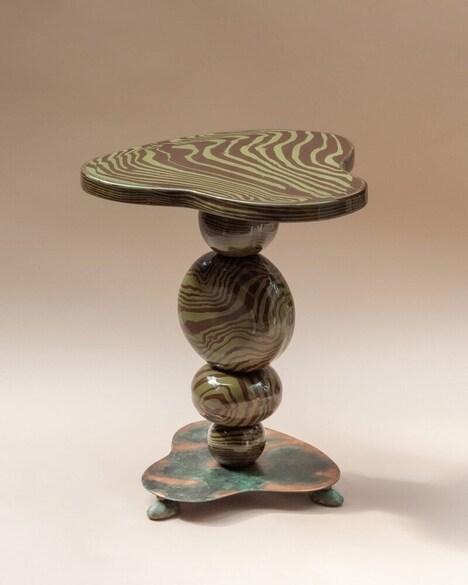
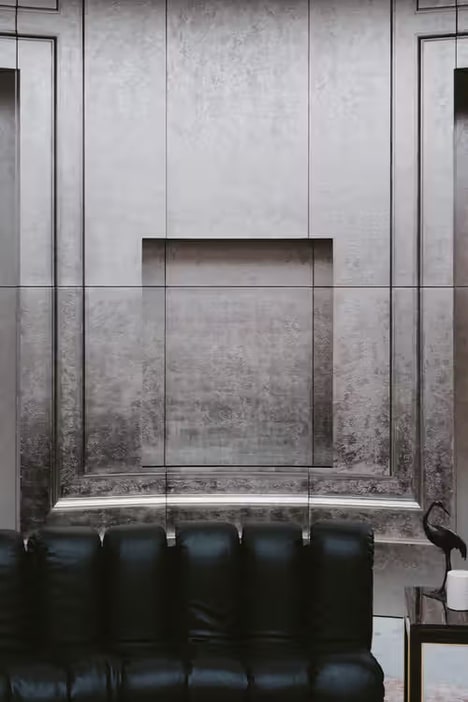
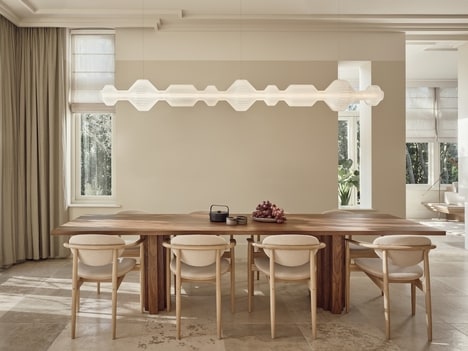
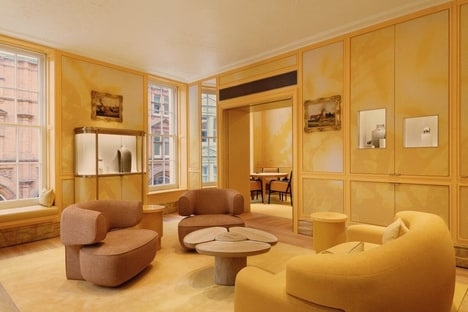
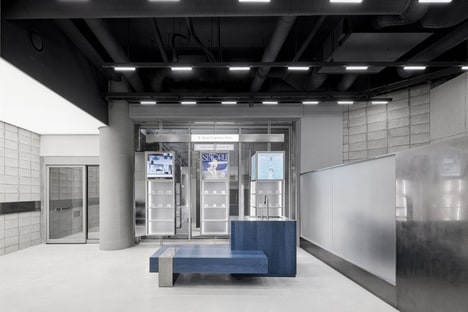
Frame has unveiled its 23rd boutique and its first location in the Netherlands, situated on the prestigious P.C. Hooftstraat in Amsterdam. The interior design is conceived as a dialogue between European modernism, craftsmanship, and sculptural form, while still reflecting the brand’s California heritage through a cohesive composition of architecture, furniture, and curated art.
Frame’s three-level space features a staircase that serves as a sculptural centrepiece. It transcends its conventional function to choreograph movement and frame a sequence of spatial experiences, while the overall design embraces principles of the Amsterdam School through expressive architecture that carefully orchestrates materiality, light, and form. Furniture spanning from the early 20th century through the 1970s brings together key figures of European and American design, including Josef Hoffmann, Richard Riemerschmid, Hendrik Wouda, Ignazio Gardella, Josef Frank, Paul McCobb, and Jacques Adnet.
Image Credit: Frame
Why This Trend Is Growing
- Heritage-modern Retail
- Retail spaces that blend regional architectural history with contemporary brand identity create differentiated physical environments that elevate shopping into cultural discovery.
- Sculptural Store Design
- Architectural elements such as staircases, lighting, and spatial flow are becoming signature brand assets that transform boutiques into immersive design destinations.
- Curated Furniture Storytelling
- Historic designer furniture and art-led interiors give luxury retailers new ways to communicate taste, provenance, and lifestyle beyond the merchandise itself.
Industries Being Reshaped
- Luxury Retail
- High-end fashion brands are using experiential interiors to strengthen physical retail relevance amid increasingly digital consumer journeys.
- Interior Design
- Demand for historically informed, gallery-like commercial spaces creates new opportunities for designers specializing in cross-era curation and material-rich environments.
- Commercial Real Estate
- Prestige shopping districts gain added value when flagship boutiques function as architectural landmarks that attract affluent visitors and design-conscious consumers.