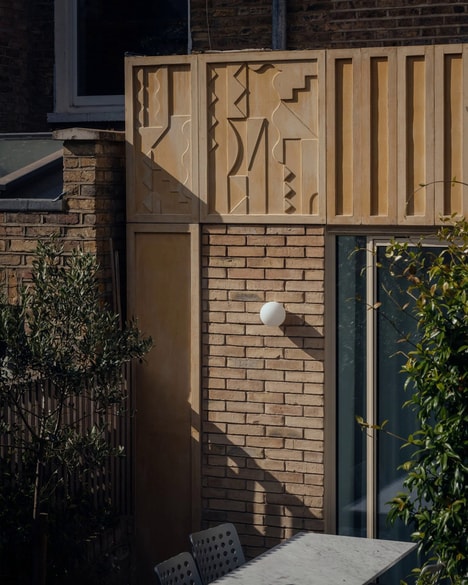
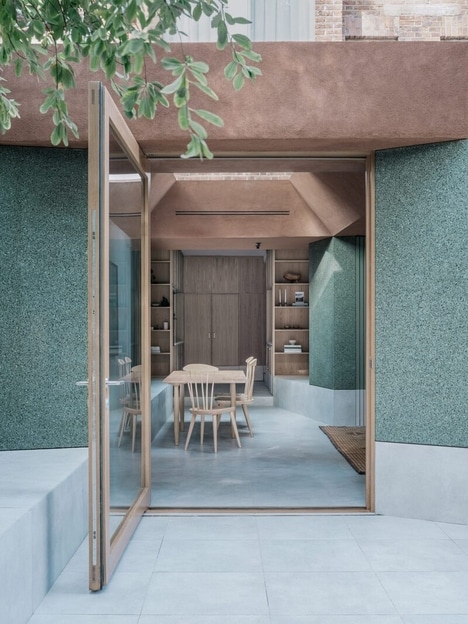
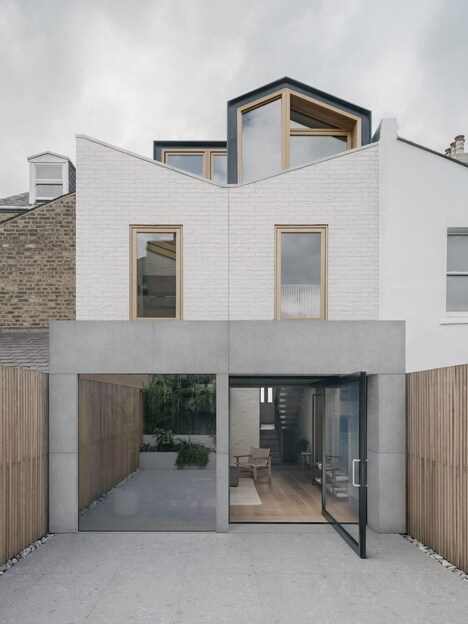
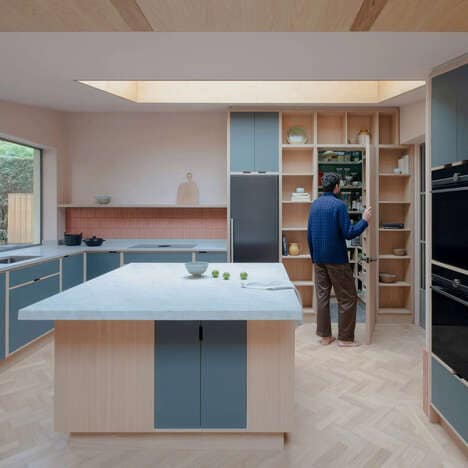
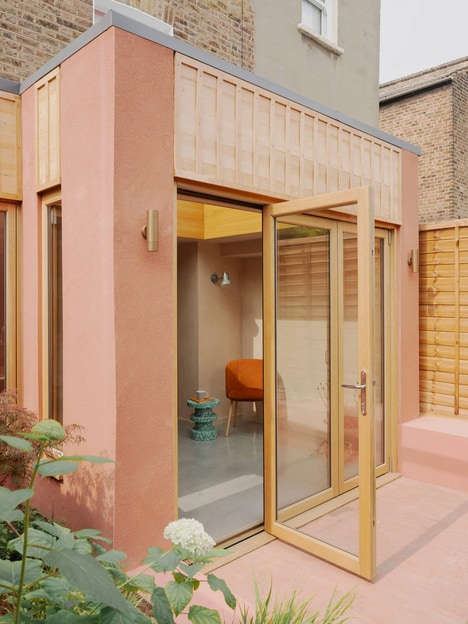
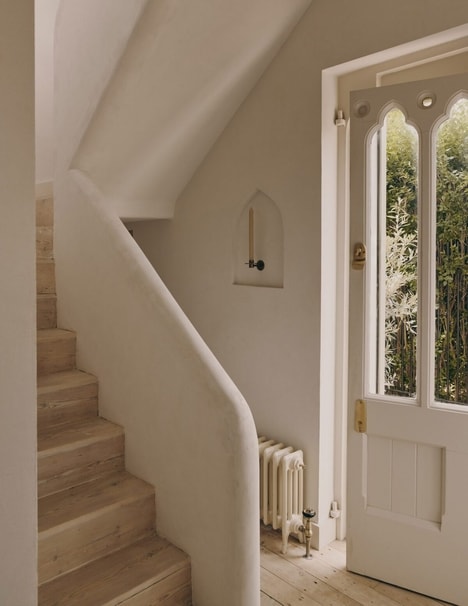
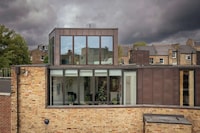
Architecture firm Whittaker Parsons has just added a long extension to a terrace home first built in the 70s dubbed the Blythe Hill House in Southeast London. The goal was to create a courtyard home filled with natural lighting. The existing home has undergone renovations, and the extension adds a 14-meter-long structure using hempcrete blockwork and stretches through the garden's length.
Camille Parsons explained more about the design concept, noting "Breaking from the usual infill or extruded approach, this extension to a 1970s terrace utilises the plot's extra width to form an elongated extension, running perpendicular to the rear elevation. This created a private shaded courtyard garden and provided unexpected spatial variety and flexibility within the home."
Image Credit: Ellen Christian Hancock
Key Themes Behind This Trend
- Eco-friendly Construction Materials
- Innovative use of hempcrete blockwork in home extensions introduces sustainable building practices to residential architecture.
- Courtyard-centric Home Designs
- Creating secluded courtyard gardens within residential spaces offers new opportunities for aesthetic and functional home environments.
- Architectural Space Optimization
- Maximizing spatial variety and flexibility through unique design approaches like elongated extensions enhances livability in urban settings.
Where This Applies
- Residential Architecture
- Architectural firms can capitalize on innovations in residential design by incorporating sustainable and space-efficient solutions.
- Sustainable Construction
- The use of eco-friendly materials such as hempcrete in building projects reflects a growing industry trend toward sustainable practices.
- Home Renovation
- The renovation industry benefits from creative adaptation techniques that reimagine living spaces to optimize light and space utilization.