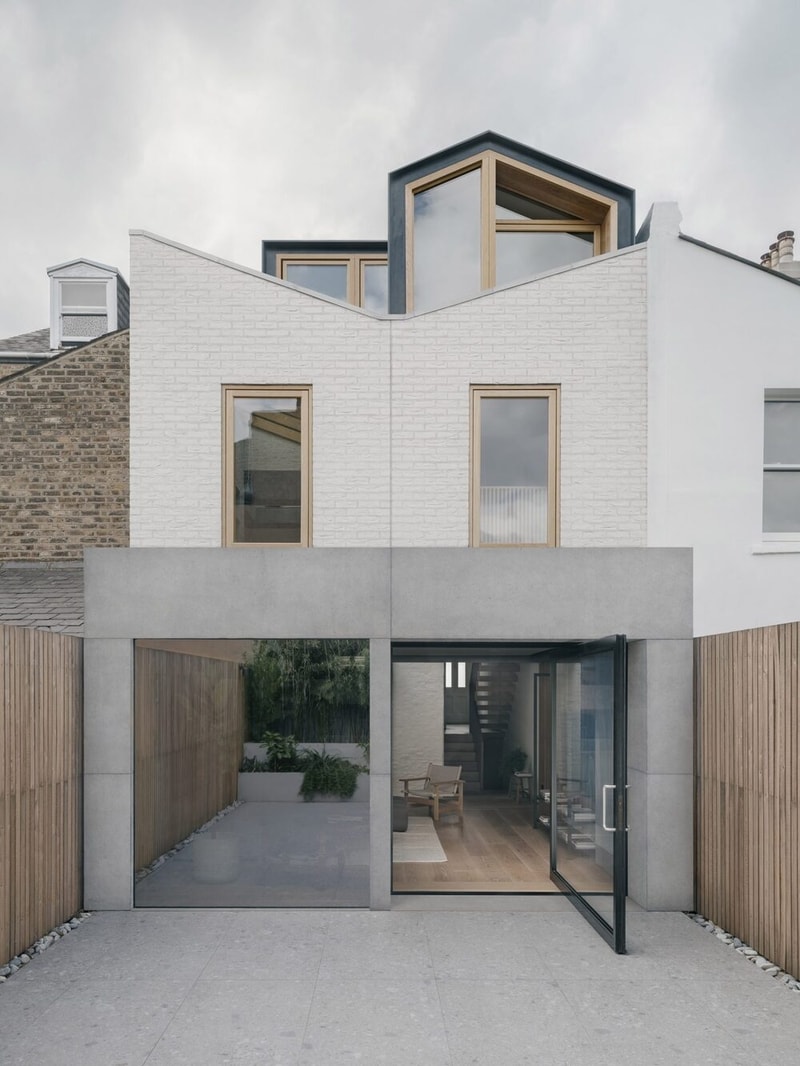
The Komorebi Extension is a residential renovation and expansion designed by ConForm Architects for a terraced house in Dulwich, south London. The project reorganises the home around light, using a vertical sequence of spaces connected by openings and voids. The design takes its name from the Japanese word “komorebi,” which describes sunlight filtering through leaves, a concept that shaped the way daylight moves through the building.
A central rooflight was expanded into a multi-storey void that draws daylight deep into the plan. Open stair treads, perforated steel floor plates and carefully aligned openings allow light and air to travel between levels. Materials including oak joinery, whitewashed brick and stone flooring create continuity across the house. At ground level, kitchen, dining and living areas connect to a terrace through large glazed doors that blur the boundary between interior and garden.
Image Credit: James Retief
Key Themes Behind This Trend
- Daylight-integrated Spatial Design
- Homes configured around intentional daylight paths create opportunities for new spatial typologies that prioritize health, visual comfort and energy reduction through passive illumination.
- Vertical Light Voids
- Multi-storey voids and expanded rooflights enable deeper daylight penetration and cross-level connectivity, presenting a shift toward vertical planning strategies that reframe circulation as a lighting and ventilation device.
- Perforated Structural Elements
- Use of open stair treads and perforated floor plates introduces a new class of structural components that integrate light transmission and acoustic control into load-bearing systems.
Where This Applies
- Residential Architecture
- Design practices focused on terraced and narrow-site housing are seeing a move toward schemes that maximize daylight and blur indoor-outdoor boundaries, altering standard layout conventions and client expectations.
- Building Materials Manufacturing
- Producers of bricks, glazing, timber joinery and engineered floors face demand for materials optimized for light reflection, thermal performance and seamless indoor-outdoor transitions in retrofit and new-build markets.
- Smart Home Lighting
- Integrated lighting systems that respond to natural daylight patterns and spatial voids are emerging as platforms that combine sensors, dynamic fixtures and building geometry data to redefine interior lighting strategies.