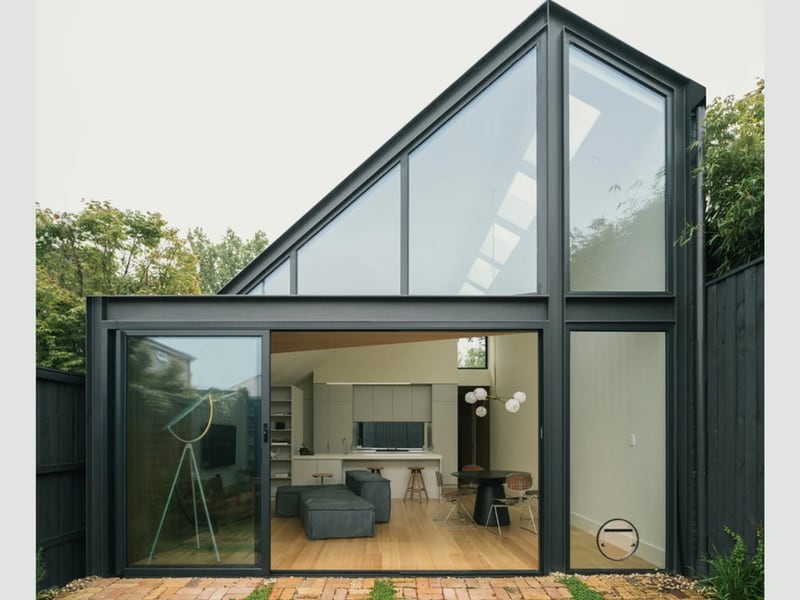
Abbie Abbotsford Terrace by Eckersley Architects is a 190-square-metre residential renovation in Melbourne that preserves the original street-facing cottage while introducing a new rear extension. The project was designed by Eckersley Architects and retains the Victorian worker’s cottage facade, keeping the streetscape unchanged. The addition is positioned entirely at the back of the site, allowing the original structure to remain intact from the street.
The extension introduces a single-level volume with high ceilings and large openings that connect directly to a private courtyard. The layout reorganizes living spaces toward the rear, using the courtyard as an extension of the interior. The new structure is carefully aligned with neighboring properties, responding to adjacent building heights and minimizing overshadowing. The project maintains a clear separation between old and new, with the original cottage restored and the addition expressed as a contemporary volume.
Image Credit: Eckersley Architects
What's Driving This Trend
- Rear-lot Modernization
- Growing preference for discreet back-of-site extensions is enabling new prefabricated, high-ceiling volumes that radically reduce on-site construction time and disturbance.
- Heritage-conscious Additions
- A rise in projects that preserve street-facing façades while inserting contemporary rear volumes is creating demand for reversible connection systems and non-invasive structural interfaces.
- Indoor-outdoor Courtyard Integration
- Increasing use of private courtyards as primary living-space extensions is driving innovation in operable wall systems and environmental-control strategies tailored to micro-urban open spaces.
Who This Affects Most
- Residential Renovation
- Renovation firms are positioned to leverage modular rear-extension products and digital heritage-assessment tools that streamline approvals and deliver consistent, high-quality outcomes.
- Architectural Materials
- Manufacturers of lightweight structural systems and high-performance glazing stand to disrupt traditional masonry additions by offering solutions that minimize load on existing heritage fabric.
- Urban Planning and Development
- Local governments and developers are encountering opportunities for new zoning and permitting frameworks that balance streetscape conservation with intensified rear-lot development potential.