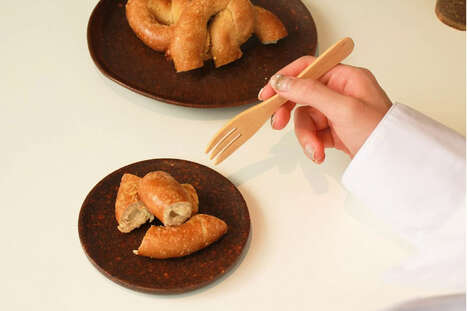
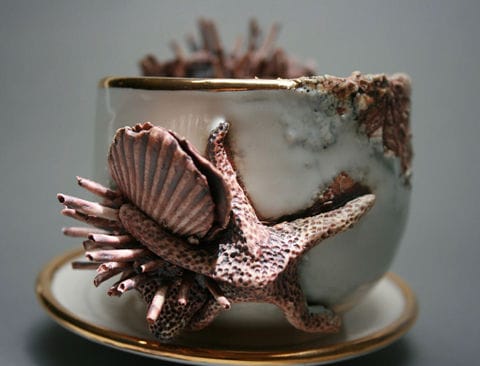
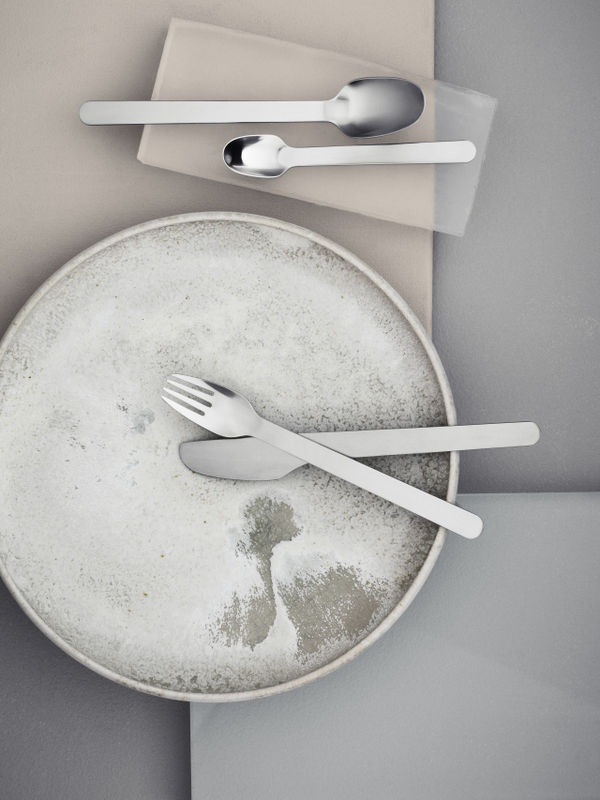
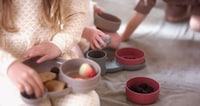
The 'Graft' series by designer Qiyun Deng features biodegradable tableware that strongly resembles different fruits and vegetables. The disposable utensils are made from bioplastic renewable resources that also take on a natural texture.
Qiyun Deng was inspired by the the idea of using plant skin as a textural medium. The legume feel perfectly matches the 3D printed place settings. The artist says on his site, "Texture and form in nature autonomously exist with a function that we can borrow to serve the purpose of artificial objects." So, a celery stalk becomes a fork handle, an artichoke leaf becomes a spoon and a pineapple stem becomes a knife.
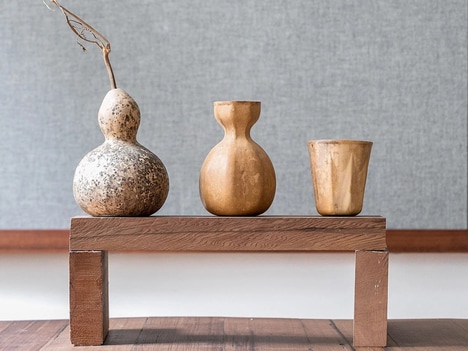
In addition to cutlery, other biodegradable tableware components include bowls and cups. In this instance, an orange peel becomes a bowl and a lemon half becomes a goblet.
Photo Credits: designboom, cargocollective
What Makes This Trend Stand Out
- Biodegradable Tableware
- Disruptive innovation opportunity: Develop new biodegradable materials and manufacturing processes for eco-friendly tableware.
- Nature-inspired Design
- Disruptive innovation opportunity: Apply the texture and form of natural elements to create aesthetically pleasing and functional products in various industries.
- 3D Printed Place Settings
- Disruptive innovation opportunity: Utilize 3D printing technology to customize and produce unique tableware designs for personal or commercial use.
Sectors Adopting This
- Food Packaging
- Disruptive innovation opportunity: Develop sustainable packaging solutions using biodegradable materials, such as bioplastics, for consumer products.
- Hospitality
- Disruptive innovation opportunity: Introduce nature-inspired tableware designs to enhance dining experiences and create a unique selling point for restaurants and hotels.
- Home Decor
- Disruptive innovation opportunity: Create home decor items inspired by natural textures and forms, offering consumers unique and visually appealing design options.