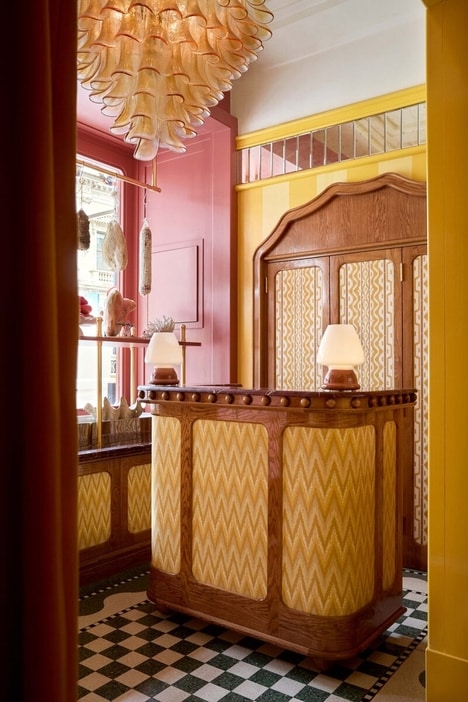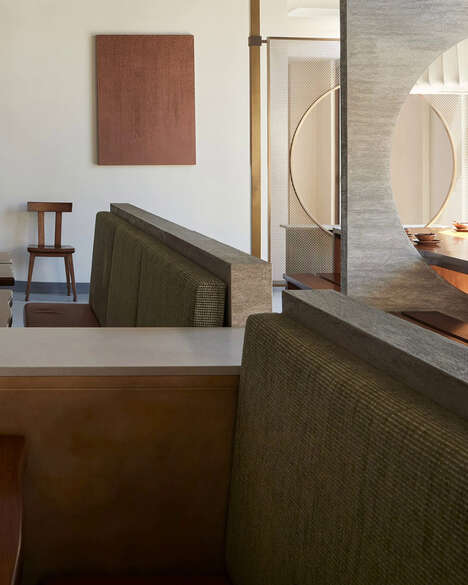
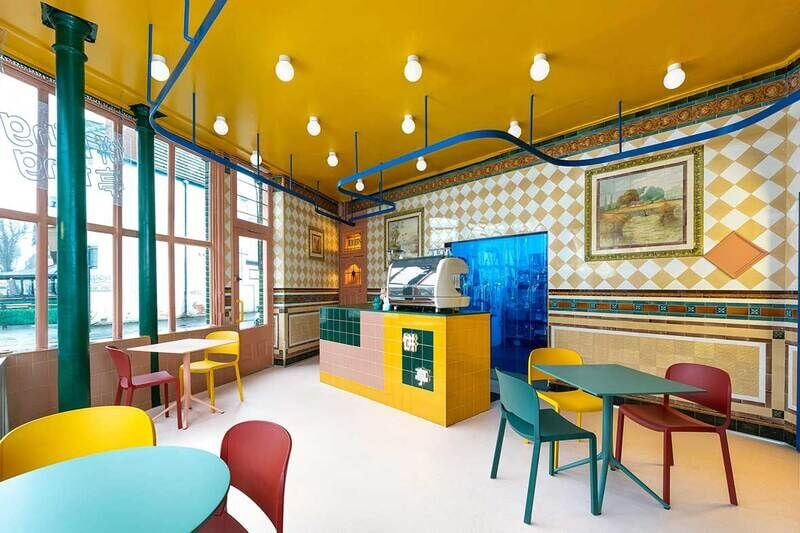
The Bing Ting Chinese Cafe in Edinburgh uses maximalist design cues to create a colorful interior space. The cafe was once an old Victorian butcher shop located in a historic building. Due to the space's historical importance, the interior designer, Studio Sam Buckley, had to follow certain building restrictions to preserve original detailing.
Buckley accomplished the taste while adding a modern twist through eccentric colors, patterns, and furniture. The muted tones and vivid hues in the cafe's original design are complemented by bold patterns and pops of color, creating a playful atmosphere. Some of the butcher shop's original tiling remains, while a new flooring by Forbo rests atop the old floor tiles without causing any damage. The pale Forbo floor acts as a backdrop to the colorful furniture.
Image Credit: The Bing Ting Chinese Cafe
Key Themes Behind This Trend
- Maximalist Cafe Designs
- Adopting maximalist design cues in cafes to create vibrant and playful interior spaces with bold patterns and pops of color.
- Historical Building Adaptation
- Preserving the original detailing of historical buildings while incorporating modern and vibrant design elements to attract new customers.
- Eco-friendly Flooring Options
- Using eco-friendly flooring options to enhance the design of interior spaces without causing any damage to original flooring.
Where This Applies
- Interior Design
- Maximalist cafe designs can be adopted by interior designers to create unique and visually appealing spaces that attract customers.
- Hospitality
- Adapting historical buildings and enhancing them with modern design elements can attract customers to the hospitality industry.
- Sustainability
- Using eco-friendly flooring options can promote sustainable practices in the design industry.