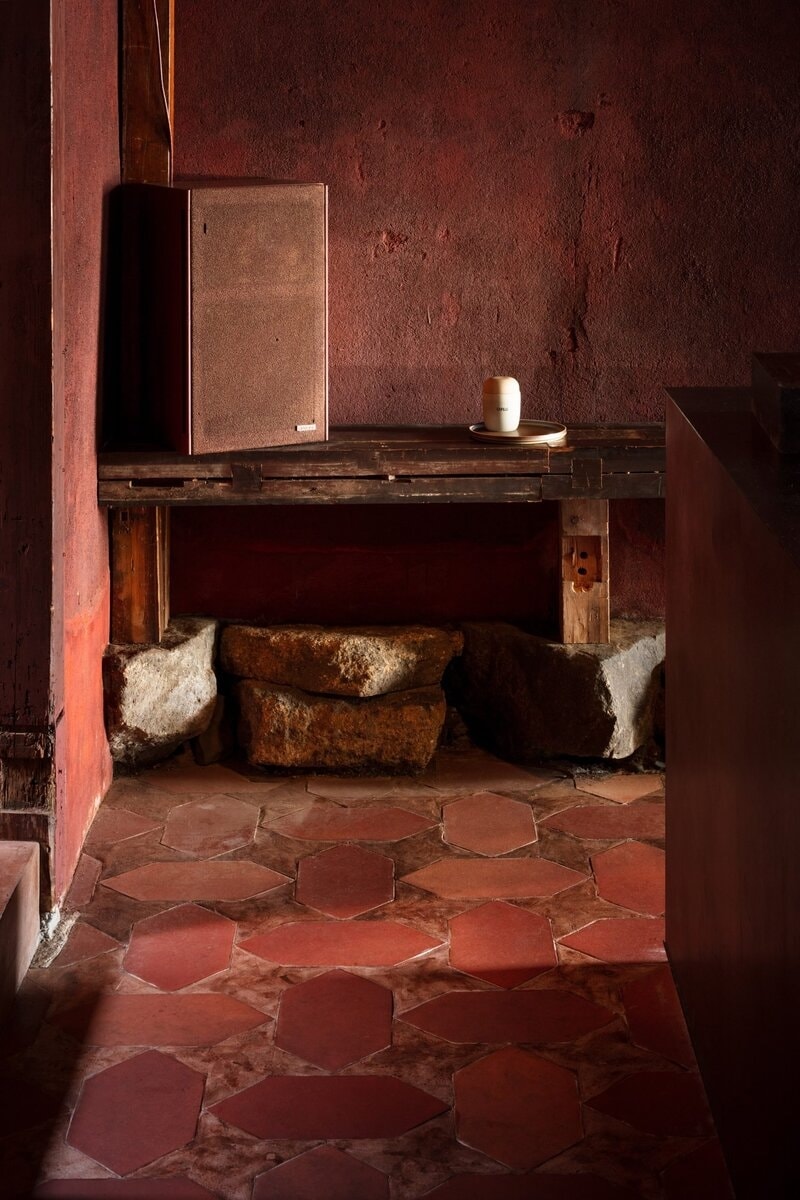
The CHALLE café by UNC Studio reworks a traditional Kyoto machiya into a contemporary gathering space that balances preservation with light intervention. The design keeps the original timber framework, uneven floor levels, and deep roof geometry intact, while introducing new surfaces, lighting volumes, and simplified joinery that give the interior a calm visual rhythm. A raised platform at the rear offers informal seating and creates a soft vantage point that frames the existing structure rather than overriding it. Natural light enters through narrow clerestories and openings, highlighting the contrast between historic texture and refined additions.
Custom furniture supports the craft-focused concept, including a compact counter constructed with stacked reclaimed wood blocks and stepped benches positioned to encourage slow pacing and conversation. Material choices such as ash flooring, pale plaster, and restrained metal accents maintain coherence without crowding the original character. Through its measured layering, the CHALLE café by UNC Studio turns a long-standing building into a social space that respects tradition while welcoming everyday use.
Image Credit: UNC Studio
What's Driving This Trend
- Heritage-blending Design
- Innovative design merges historical architecture with modern elements, facilitating spaces that honor tradition while serving contemporary needs.
- Craft-centric Interiors
- Emphasizing craftsmanship in interior design enriches user experiences by promoting slower, more engaging interactions with space.
- Light-focused Renovations
- The strategic use of natural lighting in redesign projects enhances the visual and emotional appeal of spaces, creating a sense of harmony between the old and new.
Who This Affects Most
- Architectural Restoration
- The blending of old and new in architectural spaces requires innovative techniques to preserve historic integrity while servicing modern functions.
- Interior Design
- A renewed focus on using custom, craft-oriented components redefines traditional interior spaces, elevating their aesthetic and functional value.
- Sustainable Furniture Design
- Utilizing reclaimed materials in furniture craftsmanship aligns with sustainability goals while providing unique textures and histories to product designs.