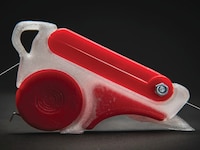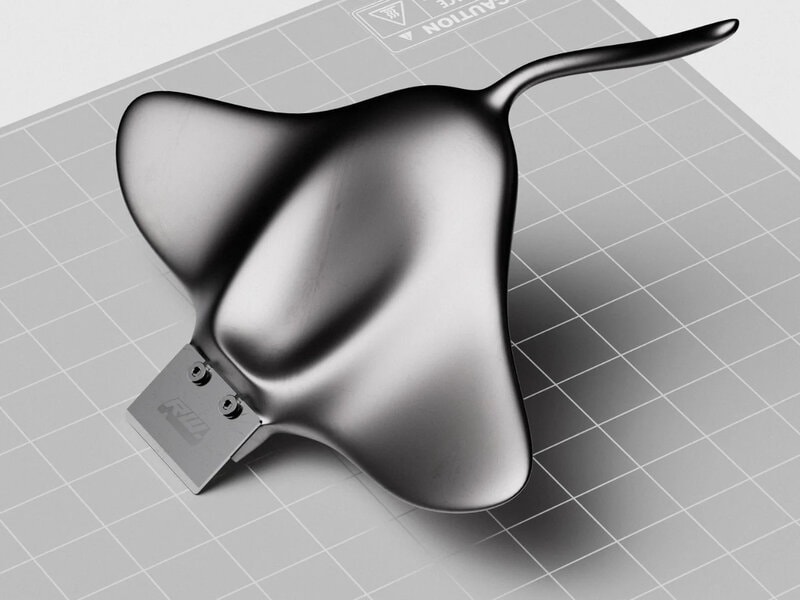
Marija Kucurski's 'RAY' recasts the 3D-printed scraper for printer owners who need to lift finished plastic parts from a build plate, using a stingray body instead of the boxy forms common in shop gear. The concept keeps a rectangular blade at the front, so the object still reads as a release tool instead of a small sculpture.
Its wide wings and raised center are designed to sit in the palm, while the tail reaches toward the wrist instead of forming a narrow handle. Two exposed screws secure the front blade, keeping the working edge legible and focusing attention on the joint that would take scraping force.
Its stingray silhouette turns a low-interest printer accessory into something displayable on an open bench. A palm-supported scraper with visible hardware broadens what 3D-printed hand tools can look like, giving printer users an expressive option without obscuring the blade's function.
Image Credit: Marija Kucurski
What's Driving This Trend
- Biomorphic Tool Design
- Animal-inspired forms are reframing utilitarian accessories as expressive objects while preserving functional clarity for maker and workshop environments.
- Displayable Workshop Gear
- Everyday printer tools gain new value when their silhouettes, materials, and hardware details make them suitable for open-bench visibility.
- Palm-fit Ergonomics
- Handleless, hand-supported tool formats suggest fresh product possibilities for compact accessories that prioritize comfort, control, and distinctive form.
Who This Affects Most
- 3D Printing
- Printer ecosystems can expand beyond machines and materials through customized accessories that blend practical use with personal expression.
- Industrial Design
- Functional objects with sculptural cues create room for differentiated product lines in categories typically dominated by generic shop-tool aesthetics.
- Maker Tools
- Small-format hand tools are becoming candidates for design-led reinvention as hobbyists seek equipment that reflects creativity as well as utility.