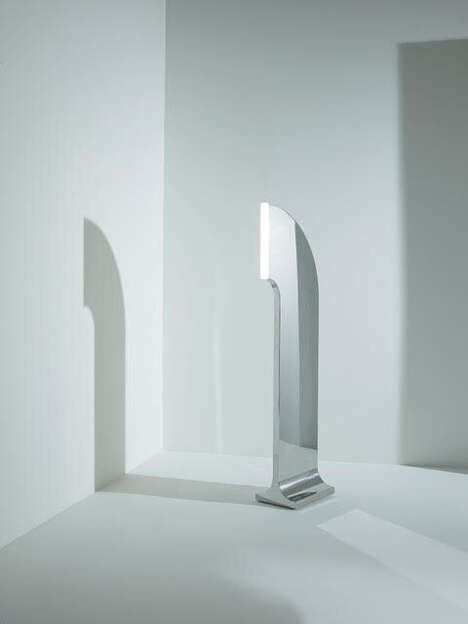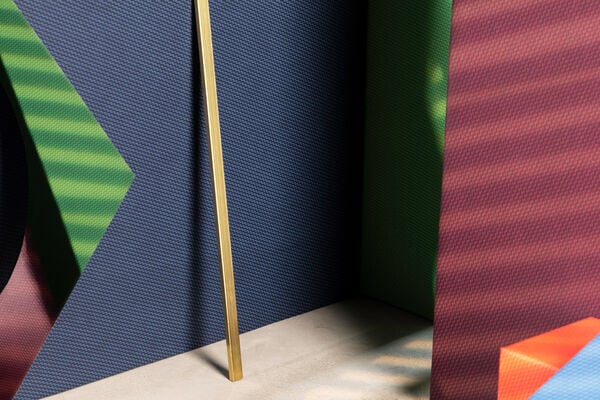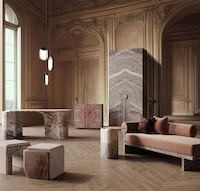
Barcelona-based Amarist Studio investigated the history and properties of the alabaster stone to create a set of designs that treat the material like a malleable plastic element. The pieces will be presented as an exhibition that highlights the scarcity of fresh water.
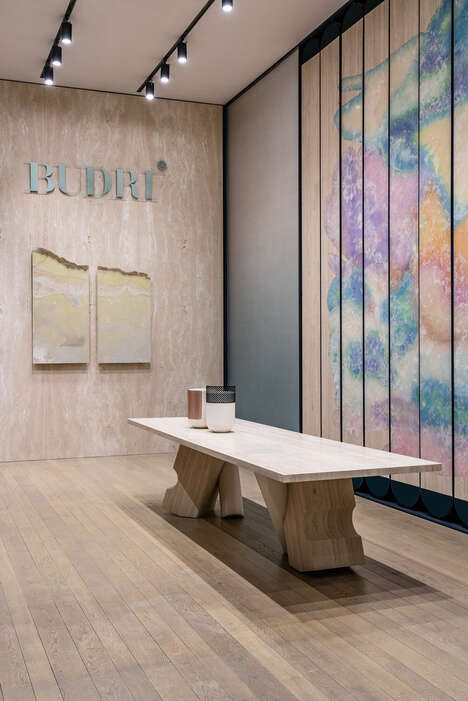
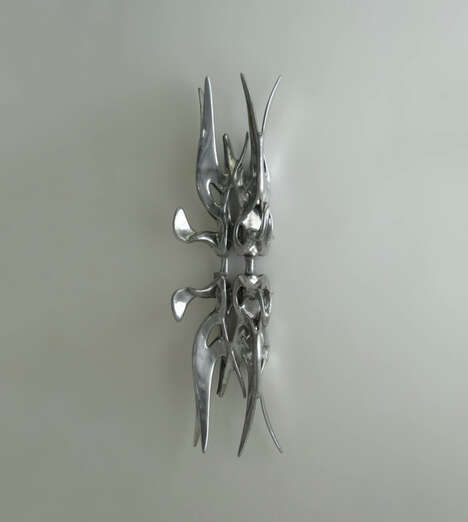
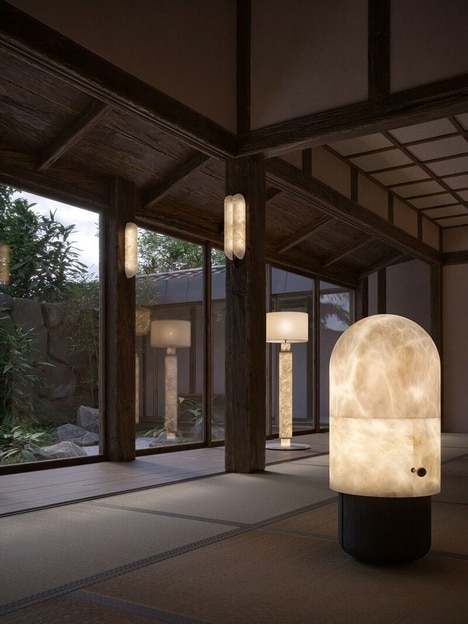
Amarist Studio's Aqua Fossil collection is carved from alabaster and includes a sculptural coffee table, a mirror, and glowing lamps. The project is meant to resemble aqueous forms. Using the pale stone formed from layers of calcium sulfate compressed under the sea, the sculptural coffee table features swooping bands that twist down to become legs. The mirror is wrapped in undulated bands of alabaster, and the lamp's glow balances on a concrete pillar.
The Aqua Fossil series, presented among natural landscapes, will be virtually displayed later this year as a digital exhibition.
Image Credit: Dezeen
Why This Trend Is Growing
- Alabaster Furniture Design
- Designers are experimenting with alabaster as a malleable material to create furniture that resembles fluid forms.
- Sustainable Design
- The use of alabaster in furniture design highlights the scarcity of fresh water, motivating designers to find sustainable solutions.
- Virtual Exhibitions
- Digital exhibitions have become mainstream and offer a new opportunity for showcasing unique and creative furniture designs.
Industries Being Reshaped
- Furniture Manufacturing
- Furniture manufacturers can incorporate alabaster as a new material in their designs to create visually interesting pieces.
- Architecture and Interior Design
- Architects and interior designers can use alabaster furniture to create unique and eye-catching designs that promote sustainability and an eco-friendly lifestyle.
- Art Exhibitions
- Alabaster furniture can be used as an art form, and virtual exhibitions can help showcase unique designs to a broader audience without the need for a physical gallery space.