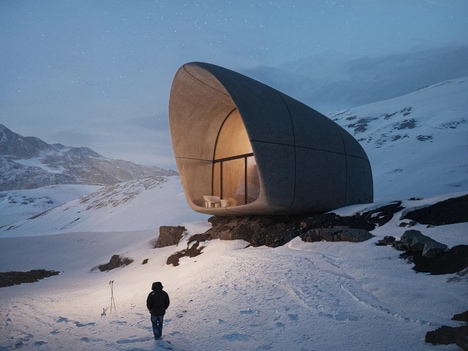
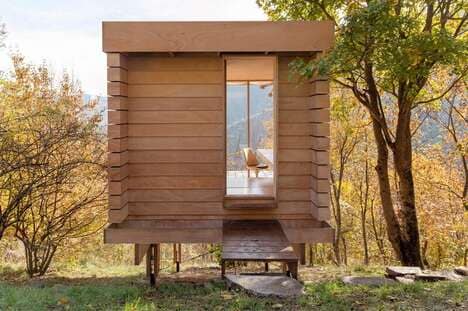
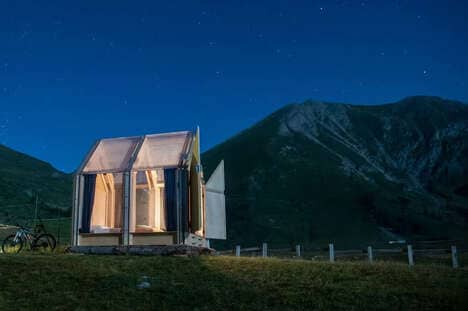
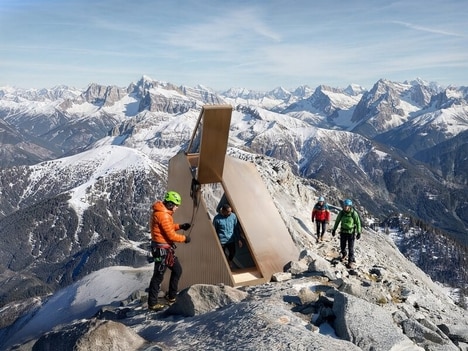
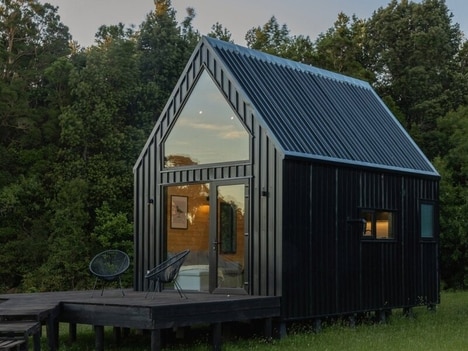
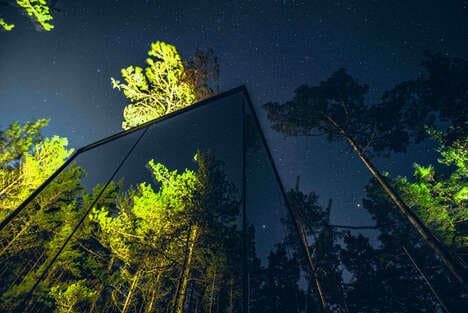
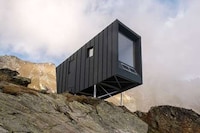
Staying in an Alpine cabin brings people closer to nature in a way that more traditional camping fails to do. Antoine, however, is a shelter that brings the experience to a whole new level. Blending completely into its rocky setting, the Alpine cabin is cleverly and creatively disguised as a boulder so as to leave the natural surroundings as undisturbed as possible.
Designed by Bureau A, a Swiss architecture and design firm founded in 2012 by Leopold Banchini and Daniel Zamarbide, the Alpine cabin was inspired by Swiss writer Charles-Ferdinand Ramuz's novel 'Derborence.' It told the story of a man, Antoine, that survives seven weeks buried under the rocks before he manages to escape. Banchini says, "We hope that people will use the cabin to spend a night in these beautiful mountains. But people can also just use it to rest for a while or to eat their sandwich with they hike in the region."
What Makes This Trend Stand Out
- Camouflage Architecture
- The crafty camouflage cabins trend involves designing architectural structures that blend seamlessly into their natural surroundings to minimize their impact on the environment.
- Nature-integrated Hospitality
- The trend of nature-integrated hospitality focuses on creating unique and immersive accommodations that allow guests to connect with nature while enjoying modern comforts.
- Inspired by Literature
- The trend of creating architectural designs inspired by literature explores bringing fictional worlds to life, capturing the essence of stories and immersing visitors in unique experiences.
Sectors Adopting This
- Architecture and Design
- The architecture and design industry can leverage the crafty camouflage cabins trend to develop innovative and sustainable structures that harmonize with the environment.
- Hospitality and Tourism
- The hospitality and tourism industry can capitalize on the nature-integrated hospitality trend by offering guests one-of-a-kind accommodations that provide a closer connection to the natural surroundings.
- Entertainment and Tourism
- The entertainment and tourism industry can explore the inspired by literature trend to create immersive experiences that transport visitors into beloved fictional worlds, attracting fans and enthusiasts.