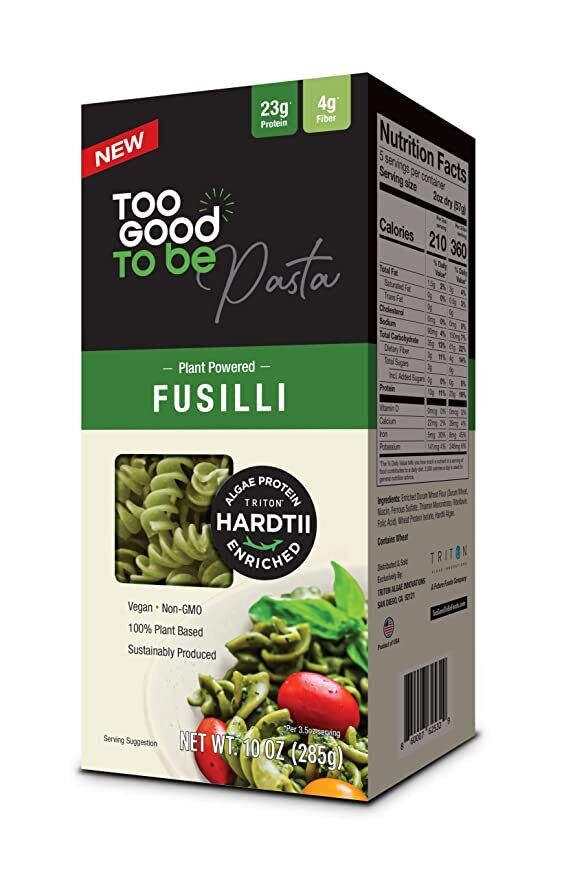
There's a new high-protein pasta product from San Diego-based future food company Triton Algae Innovations and it introduces the company's first algae-infused pasta. The high-protein Fusilli launched under the brand's Too Good To Be Foods label and it delivers a colorful, nutritious way for people of all ages to enjoy a healthy meal.
Too Good To Be Foods Pasta is infused with Triton’s unique microalgae, which is rich in Vitamin A, iron, plus omegas 3, 6, and 9. With rich levels of protein and a complete amino acid profile, the pasta product is a simple swap for ordinary pasta.
Triton has worked diligently to develop a proprietary sustainable fermentation process to produce new algae food ingredients, which infuses traditional processes with more sustainability.
Key Themes Behind This Trend
- Algae-powered Foods
- Companies can explore the potential of algae as a protein source to create innovative food products like algae-infused pasta and disrupt traditional pasta industry.
- Sustainable Food Production
- Innovative fermentation processes, like Triton's proprietary process to produce algae food ingredients, can enable companies to reduce production costs and minimize environmental impact to disrupt the food production industry.
- Plant-based Protein
- Growing consumer demand for plant-based diets and alternative protein sources presents opportunities for companies to create innovative plant-based food products like algae-infused pasta and disrupt the animal-based protein industry.
Where This Applies
- Food Manufacturing
- With the growing demand for sustainable and plant-based food products, companies in the food manufacturing industry can explore the use of algae as a protein source to create innovative and healthier food products that disrupt the traditional food market.
- Health and Wellness
- Companies in the health and wellness industry can leverage innovative food ingredients, like Triton's algae-infused pasta, to create healthier food products that appeal to health-conscious consumers and disrupt the traditional processed food market.
- Sustainability
- Incorporating sustainable fermentation processes into food production, like Triton's proprietary process, can enable companies in various industries to reduce waste and emissions, leading to a more sustainable future and disrupting traditional production methods.