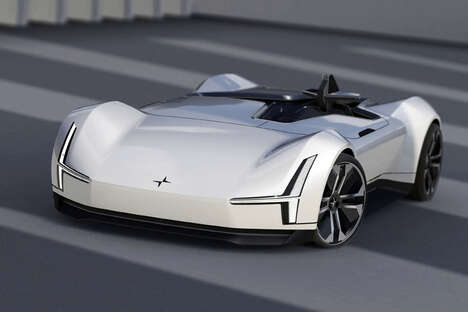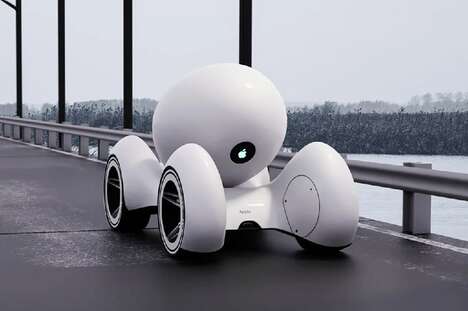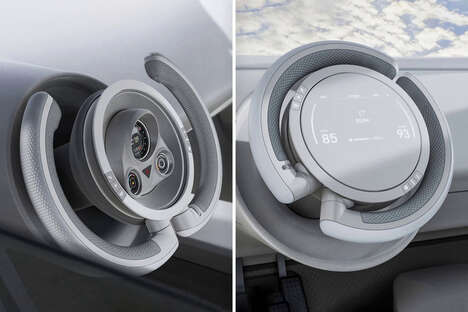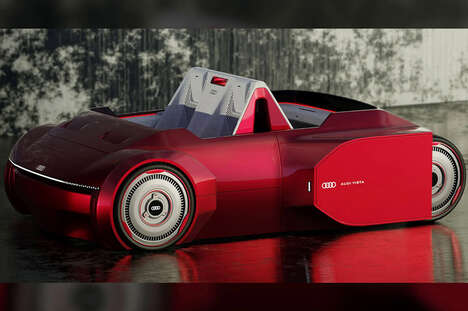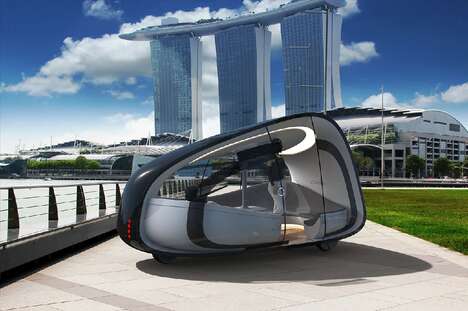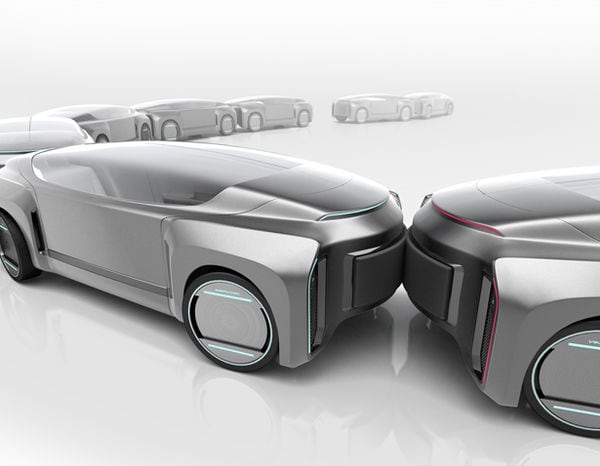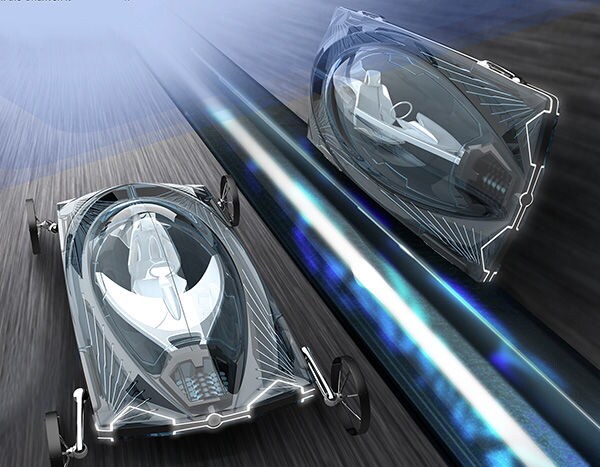
There are a few fascinating things happening within the design of the AKA24 vehicle. This futuristic conveyance offers its user two very different methods of operation, and this decision influences even the positioning of the automobile.
Haowen Deng, Chuang Dong and Zhen Qiu developed this as an innovative entry for the 2014 Driven/Undriven Michelin Design Challenge, yet this concept car surpasses expectations. The system integrates a maglev sort of technology into a single substantial rail, around which the AKA24s can pivot. When you choose manual mode for more control, the vehicle travels horizontally; should you opt for the driverless feature, the car reorients onto one side to take its place in a perpendicular lane. The transparent pod-like cabin of the AKA24 adjusts so that passengers are always comfortably upright.
Key Themes Behind This Trend
- Dual-mode Vehicles
- Designing vehicles that can operate in both manual and autonomous modes offers users flexibility and convenience.
- Maglev Integration
- Integrating maglev technology into vehicle design can improve speed and efficiency, leading to disruptive innovation opportunities.
- Perpendicular Lane Orientation
- Designing vehicles that can reorient onto one side to fit into perpendicular lanes offers a unique solution to urban traffic congestion.
Where This Applies
- Automotive
- The automotive industry has immense opportunities to explore the integration of maglev technology and other innovative features to improve vehicle performance and user experience.
- Transportation
- The transportation industry could benefit from the development of dual-mode vehicles and the adoption of perpendicular lane orientation as a solution for urban traffic management.
- Technology
- The technology industry could play a key role in developing and integrating maglev technology into various applications, including the design of futuristic vehicles like the AKA24 concept car.