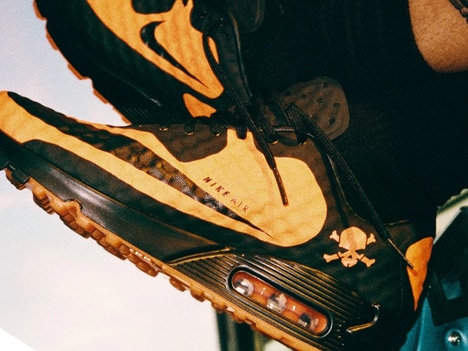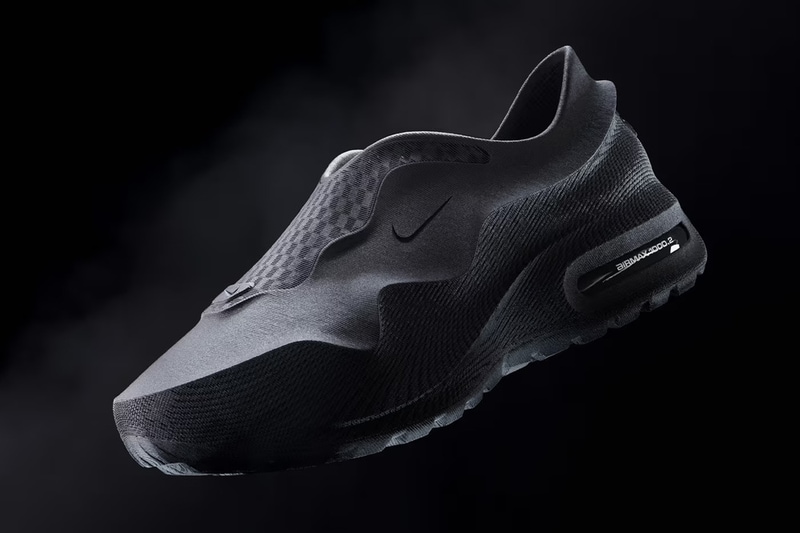
Nike Air Max 1000.2 Black is a fully 3D-printed sneaker developed with Zellerfeld as a continuation of the original Air Max 1000 concept. The updated model features a single-piece construction made from flexible TPU-based material, eliminating seams, glue, and stitching across the upper and sole. Its laceless form allows for slip-on wear, while the sculpted surface uses layered textures and wave-like patterns that reference the original Air Max 1 mudguard.
The design introduces refinements to the outsole geometry, including an updated lug structure that improves production efficiency while maintaining grip and stability. Cushioning is integrated directly into the printed form, combining firm and soft zones through varying material densities. The shoe is custom-fit through foot scanning technology and designed to be fully machine washable. The all-black colorway emphasizes the continuous molded structure.
Image Credit: Zellerfeld, Nike
What Makes This Trend Stand Out
- Seamless 3d-printed Footwear
- A single-piece TPU construction that removes seams, glue, and stitching creates new possibilities for streamlined production workflows and end-to-end recyclable products.
- Integrated Variable-density Cushioning
- Cushioning engineered directly into the printed midsole with zonal firmness gradients enables tailored comfort profiles without multi-part assembly.
- Custom-fit Scan-to-print Apparel
- Foot-scanning-driven personalization tied to additive manufacturing supports mass-customized sizing and unique form factors at scale.
Sectors Adopting This
- Footwear Manufacturing
- A shift toward fully printed, laceless designs could compress supply chains by consolidating upper, sole, and cushioning into a single manufactured component.
- Sportswear Retail
- Machine-washable, slip-on premium sneakers with bespoke fit attributes may redefine product returns, inventory turnover, and experiential retail offerings.
- Additive Manufacturing Materials
- Demand for flexible, durable TPU blends with tunable density profiles is positioned to accelerate development of specialized feedstocks and multi-material printing systems.