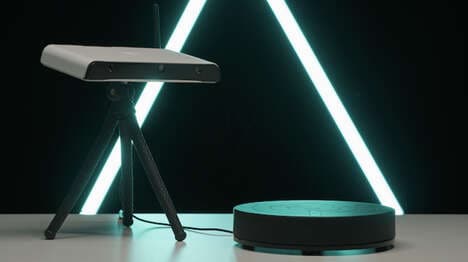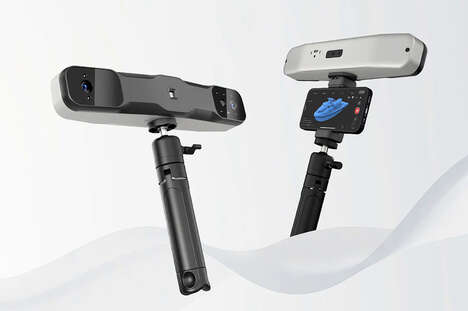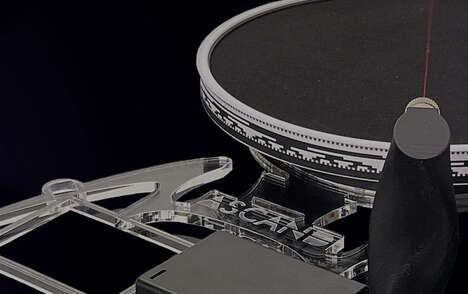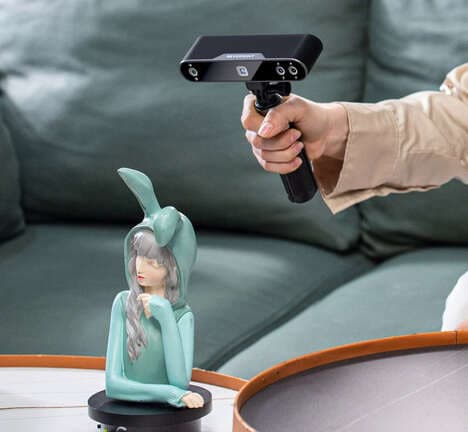
Fraunhofer IGD, a leading research institution for applied visual computing, launched a 3D scanning system that is capable of autonomously scanning objects and determining their printability in real-time.
The system takes the form of a robotic arm that scans an object with as few movements as required in order to come to a conclusion on how an object may be recreated with 3D printing. Depending on the size and shape of the object that is to be scanned, the process can take just a few seconds or only a matter of minutes.
As the object is being scanned, the 3D scanning system's intelligent algorithms create a real-time 3D image of the object, meaning that no CAD models or templates are required, especially when it comes to working with never-before-scanned or printed objects.
Image Credit: Fraunhofer IGD
Key Themes Behind This Trend
- Real-time 3D Scanning
- Fraunhofer IGD's 3D scanning system offers real-time scanning and analysis of objects, eliminating the need for CAD models and templates.
- Autonomous Scanning
- Fraunhofer IGD's robotic arm autonomously scans objects, streamlining the scanning process.
- Printability Analysis
- Fraunhofer IGD's 3D scanning system instantly determines the printability of scanned objects, facilitating efficient 3D printing workflows.
Where This Applies
- Visual Computing
- Real-time 3D scanning technologies can disrupt the visual computing industry, enabling efficient object scanning and analysis.
- 3D Printing
- Fraunhofer IGD's 3D scanning system enhances the 3D printing industry by providing real-time printability analysis of scanned objects.
- Manufacturing
- Real-time 3D scanning and autonomous scanning technologies have the potential to revolutionize the manufacturing industry, optimizing object scanning and printability analysis processes.