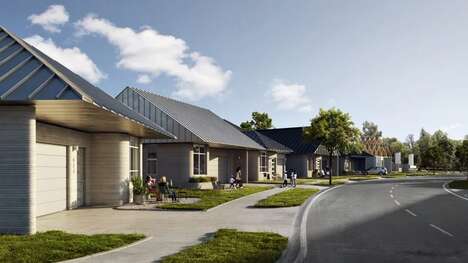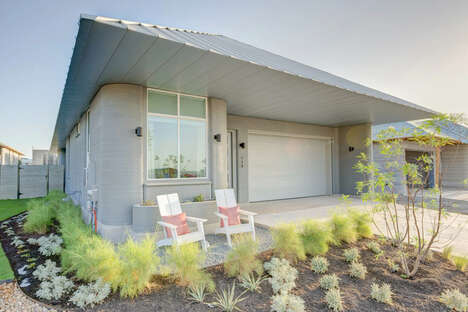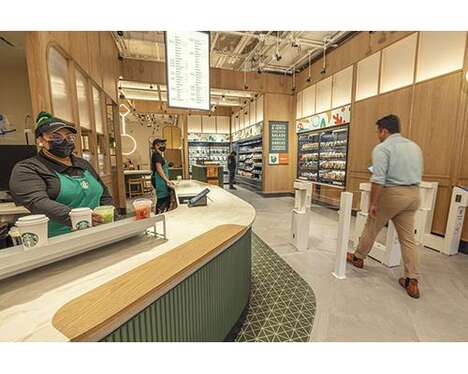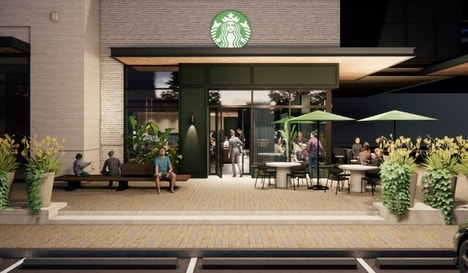
3D printing technology is revolutionizing the construction industry, enabling faster building methods that reduce labor costs and material waste—and the United States' first 3D-printed Starbucks has gone up in Brownsville, Texas. This structure has been under construction since late 2024 and this Starbucks location is now set and ready to begin serving coffee with a focus on fulfilling orders via pickup and drive-thru.
The project was led by German firm Peri 3D Construction, also responsible for creating Europe's largest 3D-printed building, involved Cobod's BOD2 printer installed on site. The machine followed a pre-made blueprint and extruded a cement-like mixture to build up the 1,400 square foot structure, layer by layer, resulting in a uniquely textured finish.
Image Credit: City of Brownsville, TX - Municipal Government
What's Driving This Trend
- 3d-printed Architecture
- The advent of large-scale 3D printing in architecture is paving the way for more sustainable and cost-efficient building processes.
- Automation in Construction
- Integrating automation technology like advanced 3D printers is transforming traditional construction timelines and labor dynamics.
- Drive-thru Coffee Innovations
- The focus on drive-thru and pickup facilities in coffee shops reflects a shift towards convenience and efficiency in the food service industry.
Who This Affects Most
- Construction Technology
- Construction technology is evolving with innovations like 3D printing, which significantly streamline the building process and reduce material waste.
- Cement Manufacturing
- The use of novel cement-like mixtures in 3D printing applications offers new opportunities for sustainable and customized building materials.
- Foodservice Automation
- The adoption of technology-driven service models like drive-thrus underscores the increasing demand for speed and efficiency in foodservice operations.