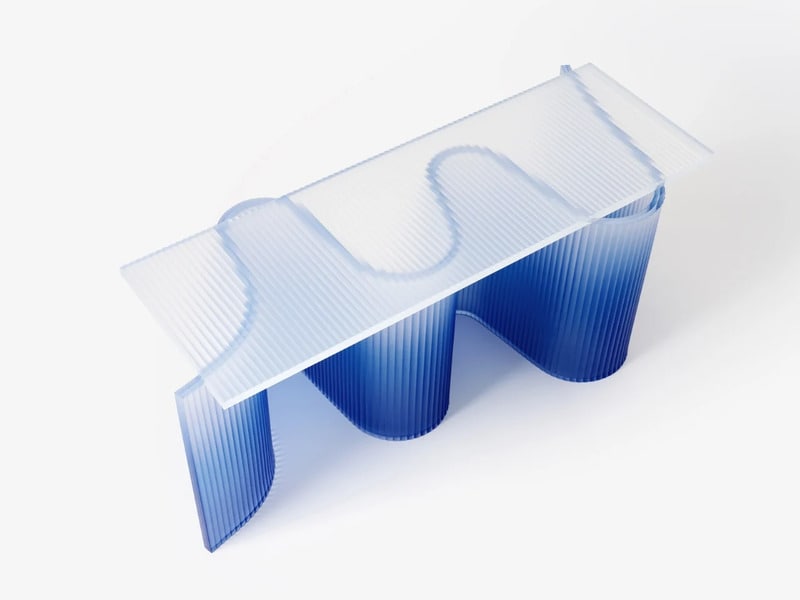
The Cresta is a sculptural bench made using recycled resin to evoke the shifting colors and fluid motion of Sardinia’s coastal waters. The bench features layered tones of blue, green, and white that flow across its surface, creating patterns that resemble waves and sea foam. Its form is shaped with gentle curves and soft transitions, allowing the object to function as seating while maintaining a strong sculptural presence. Recycled resin enables precise color blending and translucency while repurposing post-consumer plastic into a durable material.
The bench is reinforced internally to support everyday use while preserving a smooth, continuous exterior free of visible joints. Its proportions allow it to be placed in public settings such as parks and galleries, as well as private interiors and outdoor spaces. The design balances environmental responsibility with visual expression, positioning Cresta as both functional furniture and a material exploration rooted in place and sustainability.
Image Credit: Ponti Design Studio
Key Themes Behind This Trend
- Sustainable Design
- Utilizing recycled resin in furniture creates a sustainable design solution that transforms waste into high-value, functional art pieces.
- Biophilic Aesthetics
- The design echoing the natural beauty of coastal waters taps into biophilic aesthetics, enhancing environments by integrating organic visual elements into everyday objects.
- Functional Art Furniture
- The Cresta bench represents the convergence of functional furniture and art, offering new possibilities for multi-purpose sculptural seating in both public and private spaces.
Where This Applies
- Recycled Materials
- Furniture incorporating recycled materials like resin positions itself at the forefront of the recycled materials industry, promoting circular economies.
- Public Space Design
- Innovations in public space design are driven by the introduction of visually captivating and sustainable seating options for parks and galleries.
- Interior Design
- Interior design gains an eco-friendly edge with the use of reclaimed plastics in decor, merging aesthetics with sustainability for residential and commercial spaces.