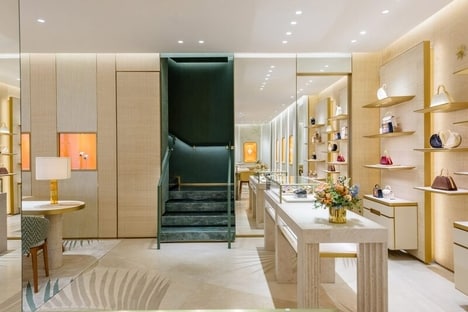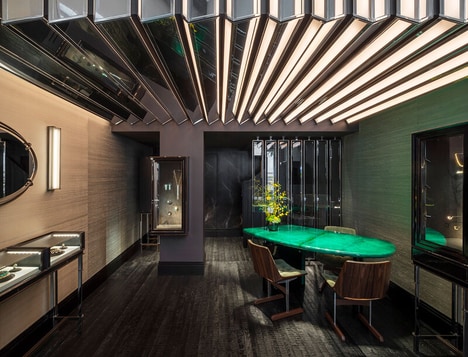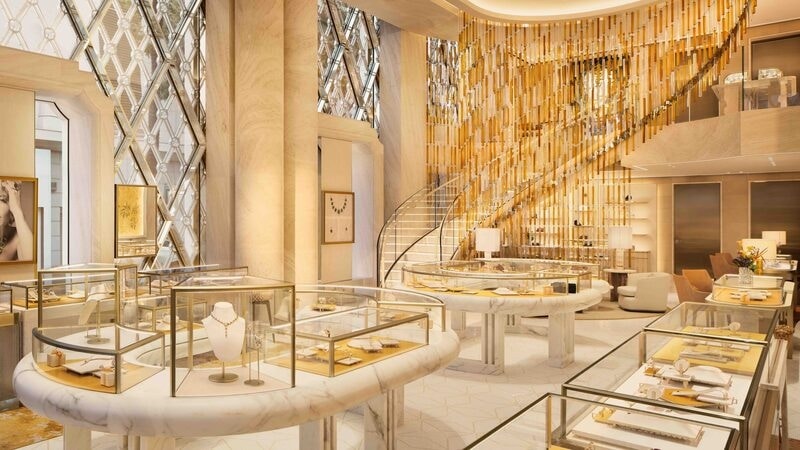
The luxury jewelry brand Bulgari has opened a new primary retail location on Rodeo Drive in Beverly Hills. The store's design is exceptionally eye-catching as it integrates architectural elements intended to reflect the brand's Roman heritage — from a façade composed of specialized 'Rosetta' glass tiles to interior features including stone columns and a sculptural glass installation of over 1,400 Murano-blown glass elements that forms a staircase curtain.
Bulgari's space is presented as a curated environment for displaying the company's various high-end jewelry and watch collections. Iconic capsules like Serpenti, Divas’ Dream, Tubogas, B.Zero1, and Octo are highlighted "with museum-like reverence."
Bulgari's boutique also boasts a rooftop area for patrons, where individuals can watch the sunsets.
Image Credit: Bulgari
What Makes This Trend Stand Out
- Architectural Retail Aesthetics
- Luxury brands are increasingly designing their retail spaces as architectural marvels to enhance brand storytelling and customer engagement.
- Experiential Luxury Shopping
- High-end retailers are creating immersive shopping experiences, such as Bulgari's museum-like displays, to attract and retain affluent customers.
- Integration of Art in Retail
- The use of artistic installations, like Murano-blown glass elements, is becoming a trend in luxury boutiques to elevate the shopping environment to an art gallery level.
Sectors Adopting This
- Luxury Retail
- The luxury retail industry is being reshaped by the integration of extravagant architectural and artistic elements that redefine the customer shopping experience.
- Architectural Design
- Architectural firms specializing in high-end retail are finding new opportunities as brands seek iconic spaces that reflect their heritage and uniqueness.
- Interior Design
- High-end interior design is gaining prominence as luxury boutiques merge retail functionality with museum-quality aesthetics to offer an elevated consumer experience.