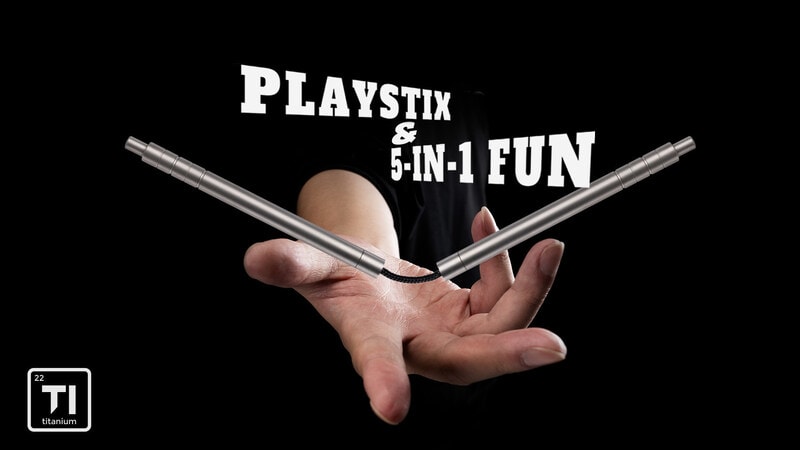
PLEI's 'PlayStix' is presented as a multi-purpose titanium EDC tool, featuring two interlocking rods. Its five-in-one design enables users to utilize it as eating utensils resembling chopsticks, a drinking straw, a dental pick, a tactile device for manual stimulation, and a small hook for attaching items. All of these functions are "fully integrated without unnecessary add-ons, keeping the tool compact and easy to carry."
PLEI used titanium for its PlayStix due to the material's durability, lightweight properties, and non-reactive nature with food. The design of the titanium EDC tool is intended to serve as a consolidated, reusable alternative to three common disposable items, and as such, it effectively addresses the growing desire to reduce single-use plastic waste.
Image Credit: PLEI
What's Driving This Trend
- Multi-functional EDC Tools
- The increasing demand for consolidated tools that serve multiple purposes indicates a shift towards efficiency and minimalism in personal items.
- Sustainable Utensil Alternatives
- As consumers become more environmentally conscious, there is a growing appetite for utensils that reduce reliance on single-use plastics through durable and reusable materials.
- Titanium in Everyday Products
- The adoption of titanium in common consumer goods highlights its appeal due to lightweight durability and safety, aligning with modern preferences for high-performance materials.
Who This Affects Most
- Outdoor and Adventure Gear
- The integration of compact, multi-use tools into outdoor gear represents a trend towards maximizing functionality while minimizing carry weight for adventurers.
- Sustainable Consumer Goods
- Innovations in sustainable materials for everyday products are transforming the consumer goods industry by prioritizing longevity and eco-friendliness.
- Foodservice and Dining
- The movement towards reusable dining accessories is reshaping the foodservice industry by reducing waste and encouraging sustainable dining practices.