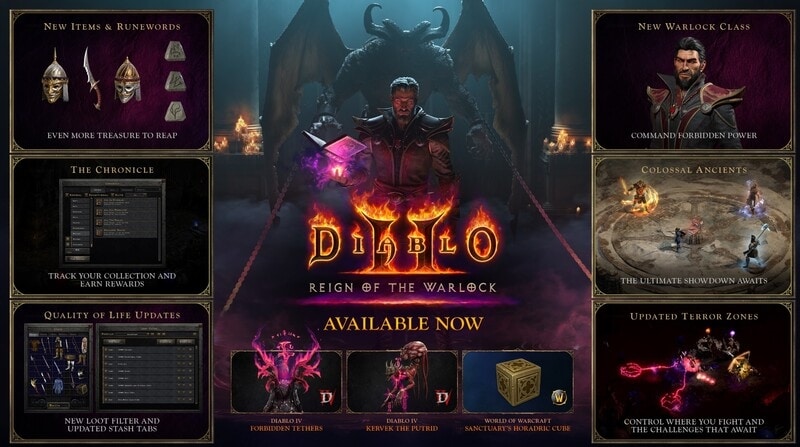
Blizzard released Diablo 2: Reign of the Warlock, an expansion for Diablo 2: Resurrected that introduces a new warlock class, featuring the ability to summon three distinct demons and bind an enemy demon to grant buffs. The expansion was shadow-dropped during Diablo's 30th anniversary Spotlight and is available now on Battle.net. It arrived alongside Diablo 2: Resurrected appearing on Steam.
Beyond the new class, the update brings modern quality-of-life systems to the decades-old title, including stash tabs that categorize materials, gems and runes, stacking to save inventory space, and customizable loot filters to highlight desired drops. The update also adds an in-game record of every item a player has ever collected, a replacement for reliance on third-party trackers.
For players, these changes reduce friction in long-term item management and make revisiting the classic more accessible, aligning legacy RPGs with current looting and inventory trends. The expansion modernizes gameplay while preserving Diablo 2’s retro action-RPG feel for both returning and new players.
Image Credit: Blizzard
Why This Trend Is Growing
- Retro Modernization
- Modernized releases that preserve classic gameplay while adding contemporary UX and systems, creating avenues for renewed monetization and long-term engagement.
- Quality-of-life Integration
- The addition of stash tabs, stacking, and customizable filters that reduce inventory friction highlights potential for platform-agnostic utility features that improve retention.
- In-game Legacy Tracking
- Persistent item histories and built-in collection records offer new foundations for provenance, collectibles marketplaces, and cross-title player profiles.
Industries Being Reshaped
- Video Game Development
- Studios updating legacy IPs can leverage hybrid design approaches that blend nostalgia with modern engagement metrics to extend franchise lifecycles.
- Digital Distribution Platforms
- Stores integrating legacy titles and surprise drops enable differentiated release strategies and increased platform stickiness through exclusive launch windows and discoverability.
- Gaming Tools and Data Services
- Third-party tools and analytics providers stand to recompose value propositions around built-in tracking, inventory management, and validated in-game telemetry.