
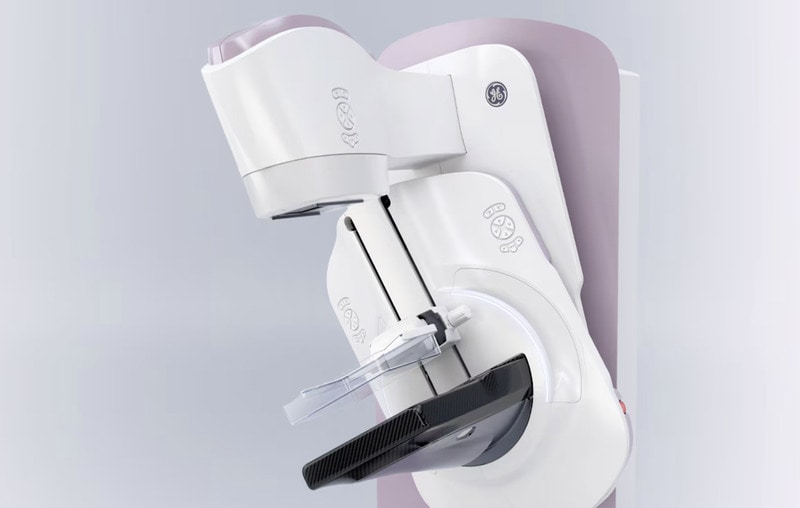
GE HealthCare received FDA Premarket Authorization for Pristina Recon DL, a deep learning-based image reconstruction technology for 3D mammography. This innovation sets a new precedent for image definition and sharpness, shaping the future of breast imaging and supporting the speed and confidence with which early cancer is detected.
Pristina Recon DL is an enhancement to the Pristina Via system, and according to GE HealthCare, it's "the first mammography technology to use deep learning in combination with iterative reconstruction to provide outstanding digital breast tomosynthesis (DBT) image quality without compromising on patient dose."
Pristina Recon DL leverages two deep learning models: the first reconstructs high-fidelity 3D volumes with greater purity, minimizing artifacts and perceived noise, while the second is trained to enhance the visualization of clinically relevant information in the DL synthesized 2D view.
What's Driving This Trend
- Deep-learning Imaging Advancements
- With deep-learning algorithms improving image precision and reducing noise, medical imaging sees a revolutionary leap in accuracy and detail.
- Non-invasive Cancer Detection
- The push towards non-invasive methods in cancer diagnostics is exemplified in technologies like Pristina Recon DL, which improve detection without increasing patient exposure.
- AI-driven Healthcare Solutions
- Artificial intelligence continues to reshape healthcare by enhancing diagnostic confidence and enabling earlier intervention through improved technological capabilities.
Who This Affects Most
- Medical Imaging
- The medical imaging sector experiences transformative growth as AI integrations redefine the standards for clarity and diagnostic reliability.
- Health Technology
- Health technology companies are at the forefront of innovation, utilizing advanced algorithms to bolster the effectiveness and efficiency of diagnostic tools.
- Breast Cancer Care
- Commitment to early detection and improved patient outcomes propels the breast cancer care industry, driven by cutting-edge imaging technologies.