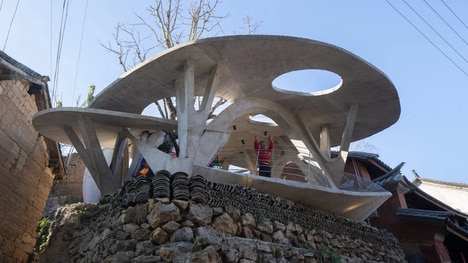
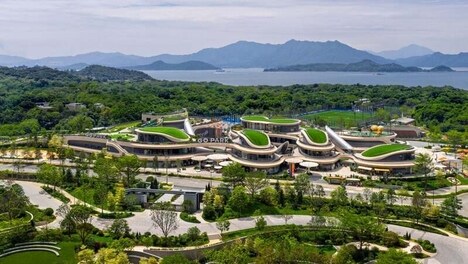
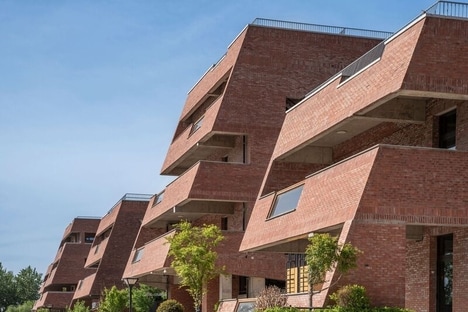
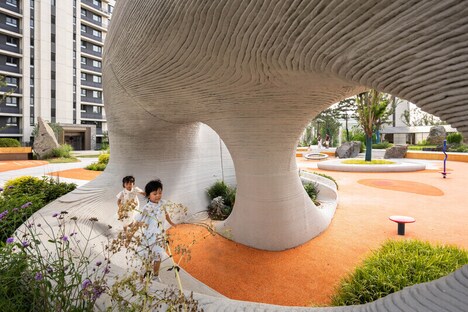
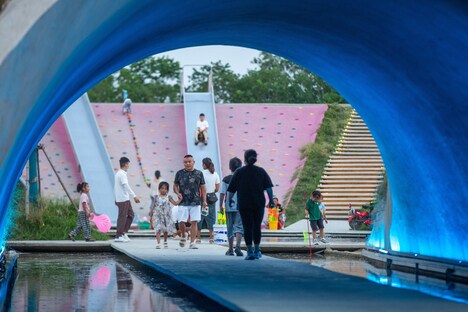
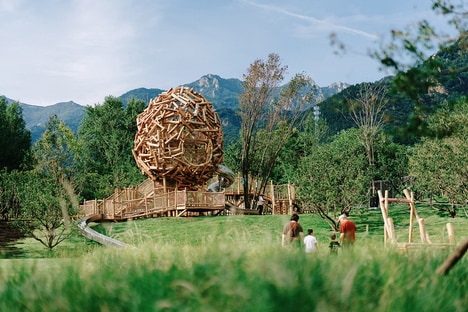
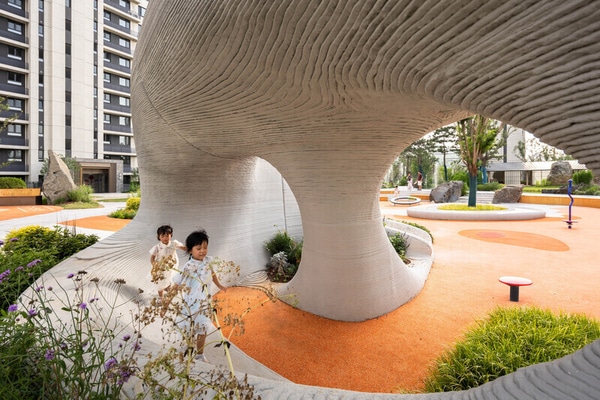
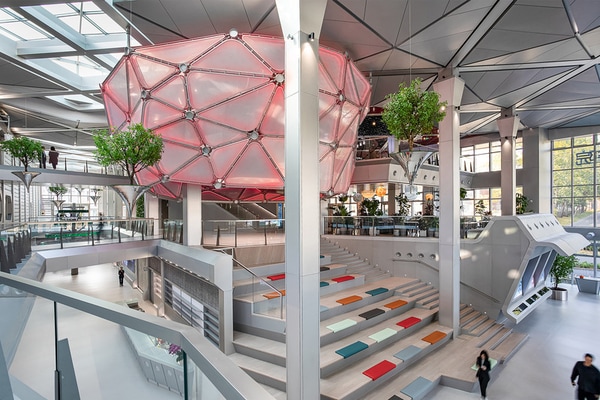
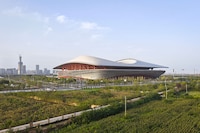
The Cishan Tribe is a recently completed outdoor play area for children located in the plaza of a shopping complex in Handan, China. The design concept draws direct inspiration from local archaeological discoveries attributed to the Neolithic Cishan culture, which dates back approximately eight millennia.
Envisioned by XISUI Design, the outdoor play area incorporates several custom play structures and sculptural elements that reference specific historical artifacts and aspects of ancient tribal life, such as domesticated chickens, cultivated millet, and traditional dwelling forms. Natural materials like wood and stone are utilized throughout the site.
The Cishan Tribe project is presented as a freely accessible public amenity intended to serve both recreational and educational purposes. Due to its inspiration, the outdoor play area also successfully fosters a connection to regional heritage while simultaneously attracting visitors to the adjacent commercial center.
Image Credit: FOLOR Studio
What's Driving This Trend
- Heritage-inspired Playgrounds
- Designing play areas inspired by local heritage and archaeological findings offers a novel approach to engage children with historical narratives.
- Cultural Storytelling Play Structures
- Play structures modeled after historical artifacts create immersive environments that seamlessly blend education and recreation.
- Natural Material Playground Design
- Utilizing natural materials like wood and stone in playground construction reflects a trend towards sustainable and eco-friendly design practices.
Who This Affects Most
- Educational Tourism
- Ventures incorporating educational elements into public attractions can drive increased interest and visitor traffic, bridging tourism and learning.
- Sustainable Architecture
- The use of environmentally conscious materials in play areas highlights the growing industry of sustainable architecture in public spaces.
- Cultural Preservation Nonprofits
- Organizations focusing on cultural preservation can find innovative ways to integrate historical education into everyday recreational activities.