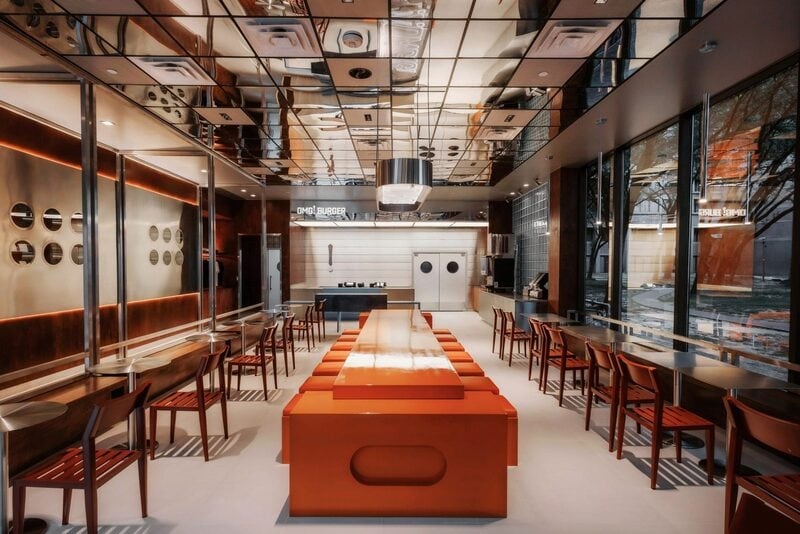
Studio Danel has completed the interior for an OMG! Burger restaurant at The Galleria in Houston, framing the fast-casual space as a modernist social setting. The 2,000-square-foot restaurant is organised around a long orange-lacquered communal table that runs through the centre of the plan. The table is supported by cuboid blocks at each end and paired with matching cube-shaped stools with cushioned tops, encouraging shared dining and interaction. Stainless steel tables, wall panels, and framing are set against stained plywood surfaces to create a contrast between industrial precision and material warmth.
Additional seating lines the perimeter, including circular stainless steel tables positioned along a built-in plywood bench that transitions into a merchandising display. Burgundy dining chairs offset the orange tones, while blue tiles define the self-service area. Reflective ceiling panels and mirrored wall elements amplify light and space, complemented by porthole-like apertures inspired by post-war modernism. Custom lighting and repeated logo details reinforce the brand’s visual identity throughout the interior.
Image Credit: Shaider Divina
What Makes This Trend Stand Out
- Communal Dining Spaces
- Restaurants are increasingly incorporating communal tables to enhance social interaction and create unique dining experiences.
- Material Contrasts in Design
- The use of contrasting materials like stainless steel and plywood is gaining popularity in interior design to blend industrial aesthetics with warmth.
- Reflective Surfaces for Space Amplification
- Utilizing reflective surfaces and mirrored elements in interiors is a growing trend to enhance light and expand the perceived space.
Sectors Adopting This
- Restaurant Interior Design
- The evolution of restaurant interiors focusing on social interaction and aesthetic contrasts is reshaping how dining spaces are conceptualized.
- Fast-casual Dining
- Fast-casual dining establishments are prioritizing unique, modernist designs to differentiate themselves and enhance customer experience.
- Hospitality Branding
- The integration of visual branding elements into interior design is becoming essential for restaurants to create cohesive brand identities.