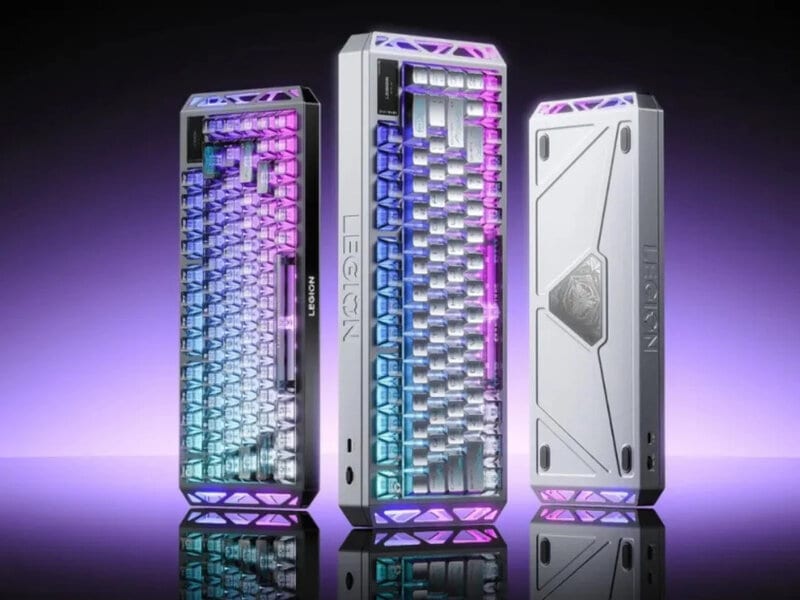
The Lenovo Legion R7 RT75 combines a compact 75% layout with Aurora Hall-effect magnetic switches that support adjustable actuation between 0.01mm and 3.4mm. Designed for competitive gaming, the keyboard features an 8,000Hz polling rate in both wired USB-C and 2.4GHz wireless modes, a 32,000Hz scan rate, and Rapid Trigger technology with 0.01mm precision. A CNC-machined aluminum chassis, gasket-mounted construction, carbon fiber positioning plate, five layers of sound-dampening material, and factory-lubricated stabilizers complete the premium build.
An integrated 1.47-inch TFT display shows battery status, connection mode, and system information while supporting custom GIFs. The keyboard is powered by an 8,000mAh battery and includes a magnetic compartment for storing the 2.4GHz wireless receiver. Available in Cloud Silver Grey and Storm Grey, the Legion R7 RT75 also supports hot-swappable magnetic switches.
Image Credit: Lenovo
What's Driving This Trend
- Adjustable Actuation Gaming
- Precision magnetic switches are creating new personalization standards for competitive peripherals where keystroke depth, response timing, and player preference converge.
- Wireless Esports Performance
- Ultra-high polling and scan rates in cordless devices are narrowing the gap between wired reliability and wireless convenience for performance-focused users.
- Peripheral Display Integration
- Built-in screens on input devices are expanding keyboards into compact status hubs that blend system feedback, personalization, and gaming identity.
Who This Affects Most
- Gaming Peripherals
- Premium keyboards with modular switches, rapid trigger inputs, and acoustic engineering signal growing demand for specialized hardware beyond conventional accessory upgrades.
- Consumer Electronics
- Compact devices combining aluminum construction, large batteries, and embedded displays reflect broader movement toward feature-dense personal technology ecosystems.
- Esports Technology
- Low-latency input systems with customizable actuation are reshaping competitive equipment standards for players seeking measurable advantages in reaction-based environments.