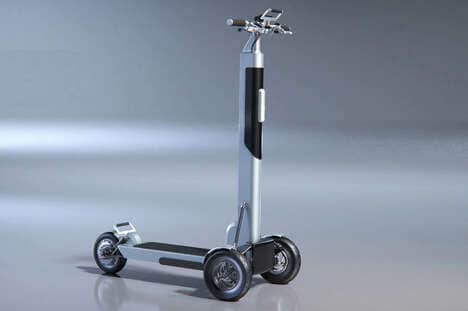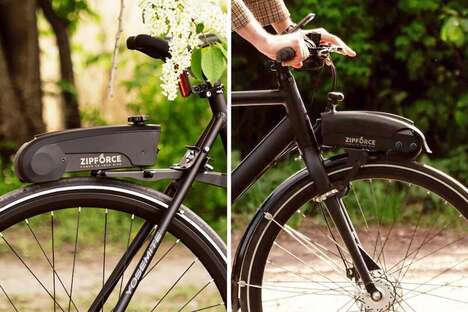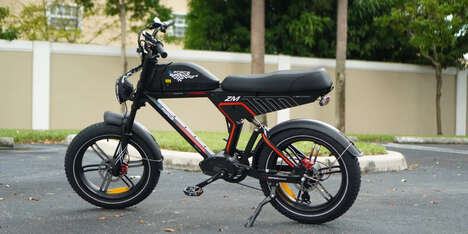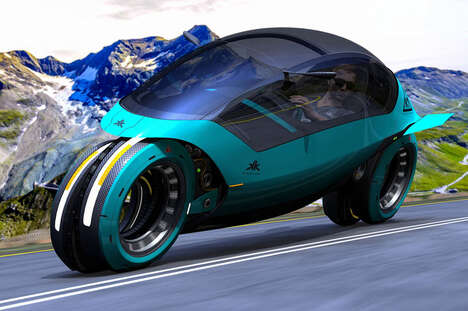


The designer of the ZIPcycle did some research into the factors that hold cyclists back from reaching increased speeds on conventional two-wheelers. It was determined that body positioning and aerodynamics play a significant role in slowing riders down when any wind resistance is experienced.
The solution to these issues comes in a sleek package that the KGP Design Studio calls the ZIPcycle. Its wheels, gears, chain, breaks and other fussy components are all covered in a streamlined aluminum case that functions as a monocoque chassis. With this slick form, drag is reduced to the extent that up to 40% less energy would be required to maintain a swift and comfortable pace with the ZIPcycle. The configuration works especially well with the recumbent bicycle seat.
What's Driving This Trend
- Streamlined Bicycles
- The development of bicycles with streamlined designs reduces drag and increases efficiency, offering opportunities for faster and more sustainable transportation.
- Aerodynamic Innovations
- Advancements in aerodynamic technology for bicycles create opportunities for improved speed and reduced energy consumption, revolutionizing the cycling industry.
- Monocoque Chassis
- The use of monocoque chassis in bicycles, like the ZIPcycle, enhances performance by reducing drag and offering a streamlined and efficient ride experience.
Who This Affects Most
- Bicycle Manufacturing
- The bicycle manufacturing industry can explore the integration of streamlined designs and aerodynamic innovations to produce faster and more efficient bicycles.
- Sports Equipment
- The sports equipment industry can capitalize on the demand for aerodynamic advancements in bicycles by developing new products that enhance speed and performance.
- Green Transportation
- The green transportation industry can incorporate streamlined bicycles with monocoque chassis to offer sustainable and energy-efficient alternatives for urban commuting.