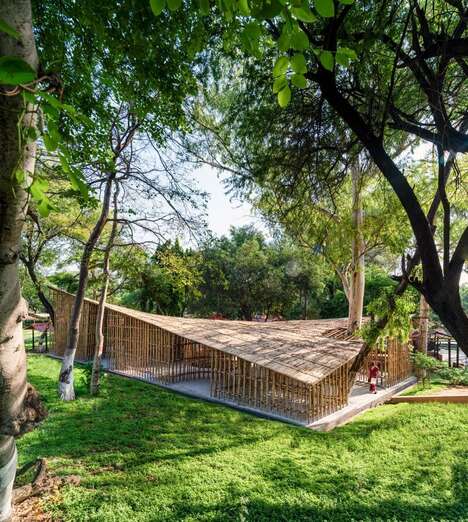
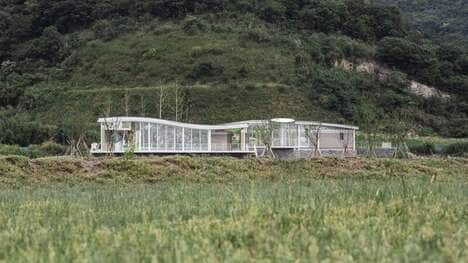
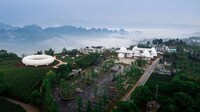
Zhuhai National Park in Guizhou province, China, is a sprawling 10,000 hectare tract of land known locally for comprising the "Bamboo Sea." The gateway to this park, which was designed by Chinese architecture firm West-line Studio, makes use of the ample bamboo that grows around it, using the trees as a natural canopy.
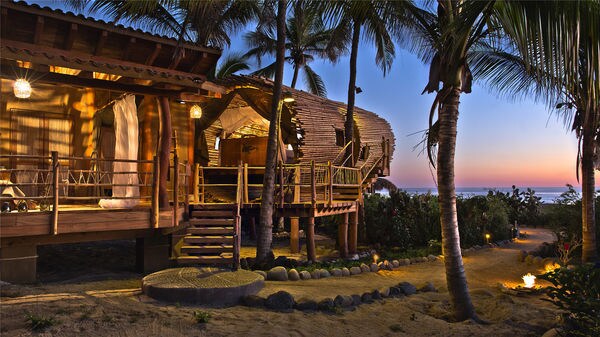
The Zhuhai National Park gateway is itself designed to incorporate bamboo into its structure. The fast-growing tree is known for its structural strength, making it a solid option for building. Further, the interesting, segmented pattern of bamboo trunks are pleasing from a design standpoint.
To make use of the bamboo canopy, West-line Studio built a raised pathway that zigzags through the woods. This path offers many different angles at which to take in the nature as people enter the park.
Key Themes Behind This Trend
- Bamboo as Building Material
- Using bamboo as a structural material can offer strength and an interesting design aesthetic.
- Natural Integration in Architecture
- Integrating natural materials into architectural design can create unique and visually appealing structures.
- Elevated Walkways
- Building elevated pathways can offer new perspectives and ways to experience outdoor spaces.
Where This Applies
- Architecture
- Architecture firms can explore using natural materials and innovative design techniques to create unique and sustainable structures.
- Tourism
- Parks and outdoor spaces can incorporate unique architectural features and elevated walkways to enhance visitors' experiences.
- Sustainable Construction
- The use of sustainable materials like bamboo in construction can offer environmentally-friendly alternatives to traditional building materials.