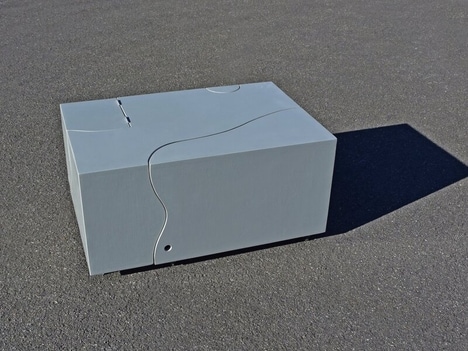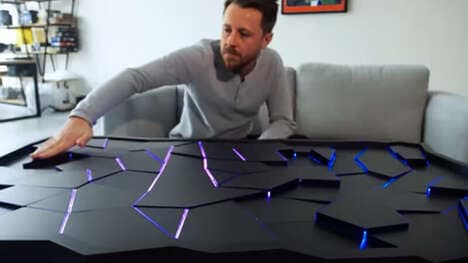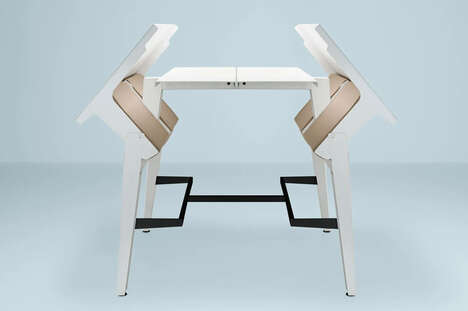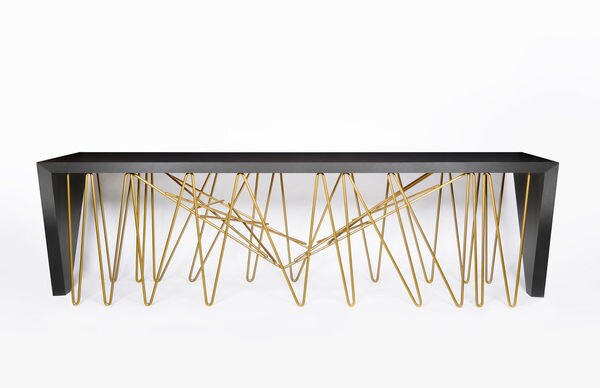
The Zero-Energy Furniture Table table is an oak table that is capable of absorbing and emitting heat much like a sponge. The table was developed by Paris-based designer Jean-Sebastien Lagrange and engineer Raphael Menard, with the intention of "creating furniture that could work as a solution to climate change."
The table is made of a wax-like substance that takes advantages of the properties of phase-changing materials. This substance absorbs heat at 71.6 degrees Fahrenheit or above, and releases it when the room becomes colder. So if the Zero-Energy Furniture Table were to be located in a conference room or used as a shared working space in a public lounge, it would absorb the excess heat generated by people seated round it. Excess heat would then be trapped and slowly released to help maintain a consistent temperature.
The table is tipped by its inventors for use in home and hospital environments, but it could just as easily be at home in any public space where people have use for tables.
What Makes This Trend Stand Out
- Phase-changing Materials
- Opportunity for creating innovative products and solutions that can absorb and emit heat based on temperature changes.
- Climate Change Solutions
- Potential for developing furniture and technologies that can address the challenges of climate change.
- Smart Furniture
- Advancement in furniture design that incorporates technology to create functional and adaptable pieces.
Sectors Adopting This
- Furniture Manufacturing
- Disruptive opportunities to create temperature-regulating furniture that enhances comfort and energy efficiency.
- Interior Design
- Opportunity to incorporate innovative furniture designs into interior spaces to optimize temperature regulation.
- Hospitality
- Potential for integrating temperature-regulating furniture in public lounges, conference rooms, and other shared spaces to improve comfort for guests.