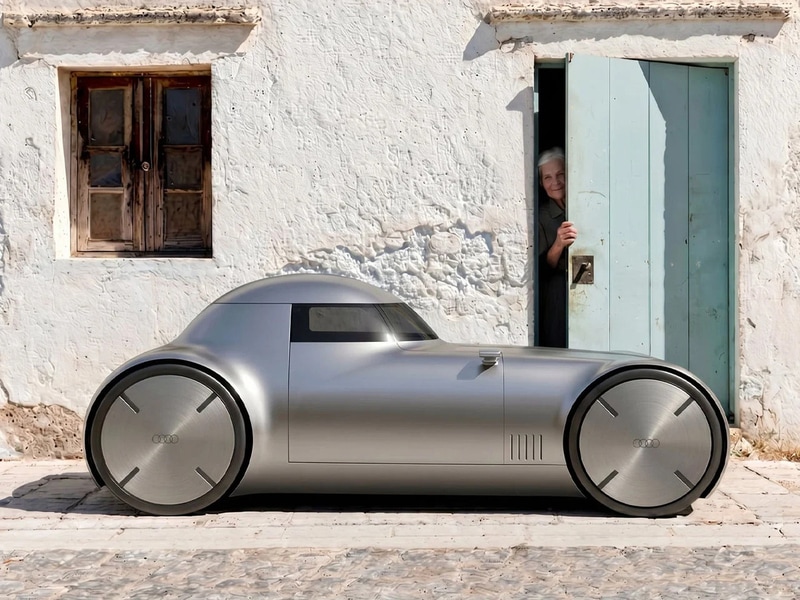
The Zero One Sphere reimagines electric vehicle design through a skeletal structure formed by four exposed cylindrical tubes that define the concept's overall silhouette. Created independently by designer Wini Camacho, the concept replaces a conventional body shell with an open framework that visually connects the front and rear while exposing much of the vehicle's underlying architecture. Thin LED lighting, oversized wheels, and simplified geometric surfaces maintain a visual connection to Audi's contemporary design language.
The concept explores the packaging freedom offered by electric powertrains, using the absence of a combustion engine to prioritize structural expression and minimalist proportions. Its exposed framework also suggests the possibility of modular body panels, seating layouts, and cargo configurations that could be adapted without altering the core structure.
Image Credit: Wini Camacho
What Makes This Trend Stand Out
- Exposed Frame Evs
- Skeletal vehicle architectures create space for differentiated aesthetics, lighter material strategies, and visible engineering as a premium design language.
- Modular Vehicle Bodies
- Adaptable panels and interchangeable cabin layouts point to new ownership models where one electric platform supports multiple lifestyle or commercial uses.
- Minimalist Mobility Design
- Reduced surfaces, slim lighting, and geometric forms reflect growing demand for electric vehicles that communicate efficiency through visual simplicity.
Sectors Adopting This
- Electric Vehicles
- Open-architecture platforms broaden design flexibility by decoupling powertrain packaging from traditional body proportions and vehicle categories.
- Automotive Design
- Concept-led experimentation with exposed structures gives brands new ways to signal innovation, performance, and technical transparency.
- Urban Mobility
- Configurable electric frameworks align with compact transportation needs by enabling vehicles that shift between passenger, cargo, and shared-use formats.