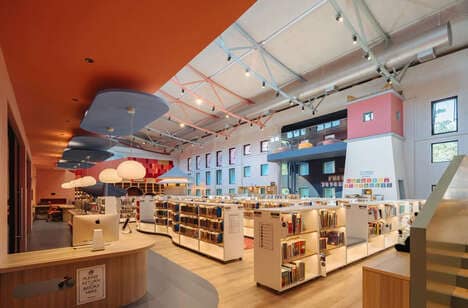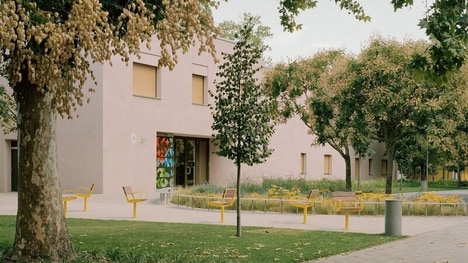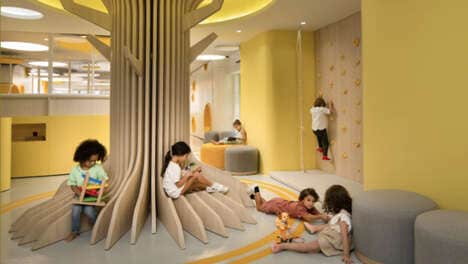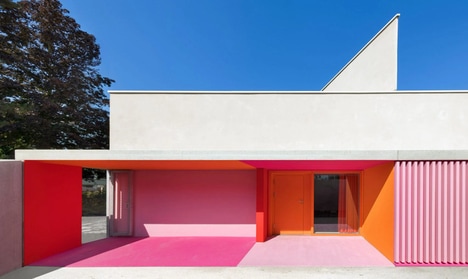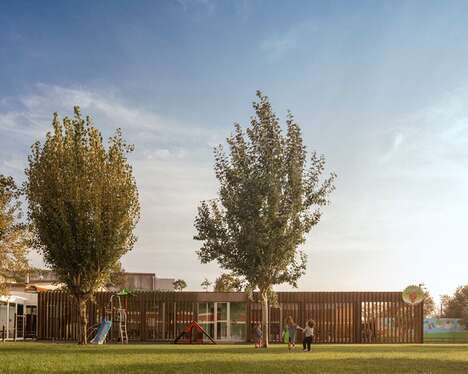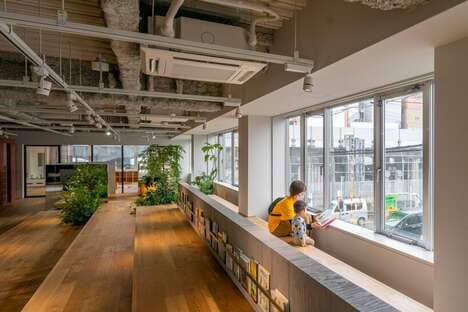
In designing a building for children, architects have to entirely rethink the way that spaces relate to one another, and Wujiachang Kindergarten does just that. The building holds nine kindergarten classrooms, meaning that on any given day the vast majority of its occupants will be young kids, and the shapes embedded in the building address that unique condition.
Children are far more imaginative than adults, for whom decades of experience with culture have left accustomed to routine and straightforward thinking. Wujiachang Kindergarten plays to that sense of imagination, with hallways and courtyards that give children choices for how to travel. In the words of the architects, Atelier Fronti, "the whole building seeks to become a huge spacial toy for children to play in."
Key Themes Behind This Trend
- Imaginative Spaces for Children
- Designing buildings that encourage imagination and give children choices for how to navigate the space.
- Child-centric Architecture
- Creating buildings that are specifically designed to cater to the unique needs and creativity of children.
- Interactive Learning Environments
- Constructing spaces that serve as educational tools and inspire active engagement from young learners.
Where This Applies
- Architecture
- Opportunity for architects to specialize in designing innovative spaces for children that promote imagination and creativity.
- Education
- Creating child-centric learning environments that foster creativity and engagement in early education settings.
- Construction
- Demand for specialized construction projects that cater to the unique needs and specifications of educational institutions for children.