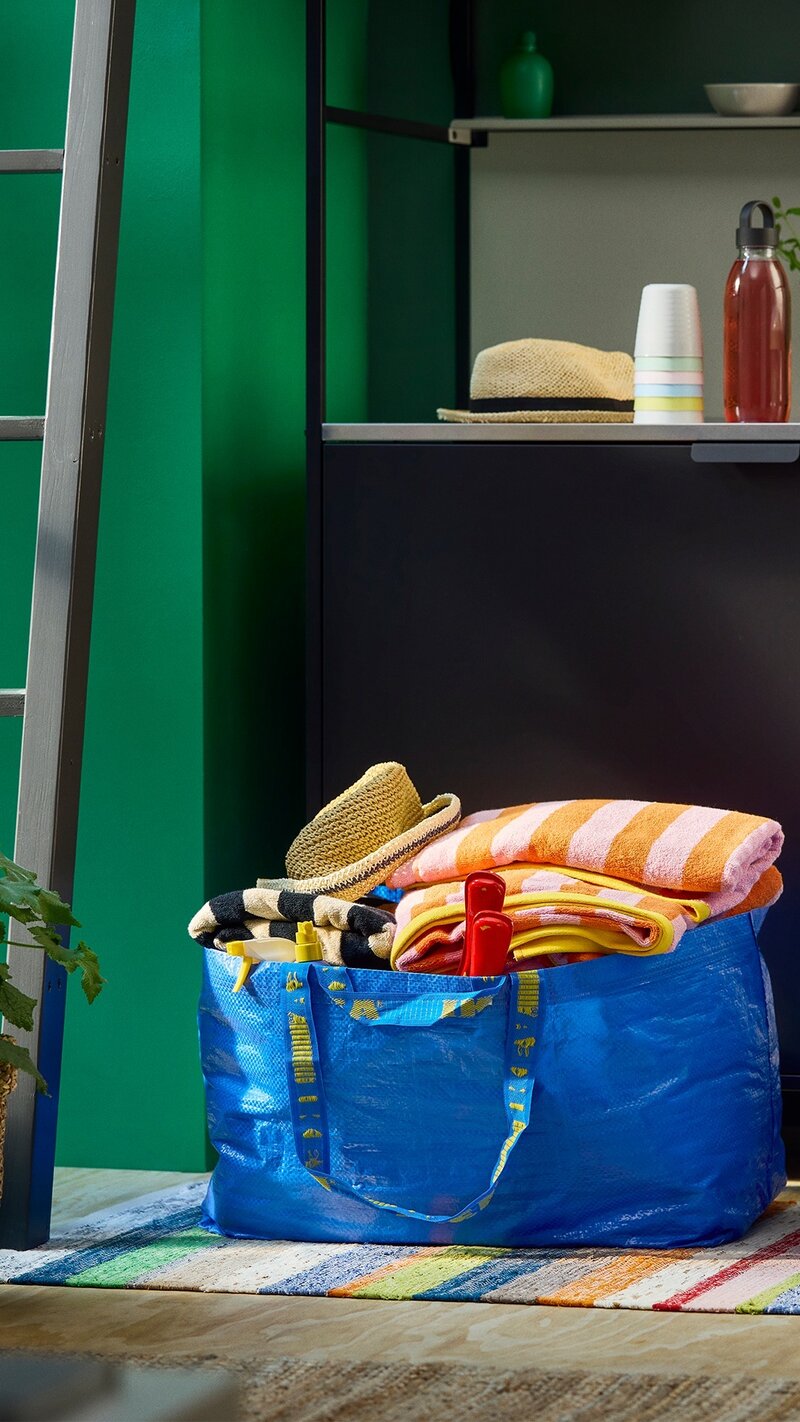
IKEA has rebuilt its 'FRAKTA' carrier bag using recycled inputs, giving customers the same bag for carrying purchases home and handling daily chores. The updated version now uses at least 90% recycled material, cutting virgin plastic use while preserving the familiar shape and function.
IKEA is applying the change to the 36-liter and 71-liter versions, so buyers can still choose between two haul sizes. At least 70% of that recycled content comes from discarded food packaging and plastics. The bag dates to 1996 and began as a carry-home option for IKEA purchases.
A build with 90% recycled material turns a staple carryall into a visible sourcing upgrade in everyday use. Keeping FRAKTA's familiar function while changing its inputs makes recycled content feel like a baseline feature on a mass product.
Image Credit: @ikea
Why This Trend Is Growing
- Recycled Everyday Staples
- Mass-market household goods are being redesigned with high recycled-content materials, creating room for brands to make sustainability a standard product attribute rather than a premium add-on.
- Waste-sourced Materials
- Discarded packaging and post-consumer plastics are becoming viable inputs for durable consumer products, opening new value chains around traceable waste recovery and material performance.
- Iconic Product Updates
- Familiar legacy items are being refreshed through behind-the-scenes material changes, allowing companies to modernize sustainability credentials without disrupting consumer habits.
Industries Being Reshaped
- Retail
- Large retailers can embed recycled materials into high-volume essentials, turning routine customer touchpoints into visible proof points for circular sourcing.
- Packaging
- Food packaging waste is gaining importance as a feedstock for new products, linking packaging design, collection systems, and downstream reuse markets more closely.
- Consumer Goods
- Durable carryalls and home-use products made with recycled inputs highlight opportunities for everyday items to balance affordability, function, and lower virgin material dependence.