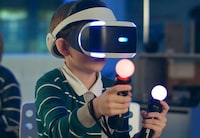
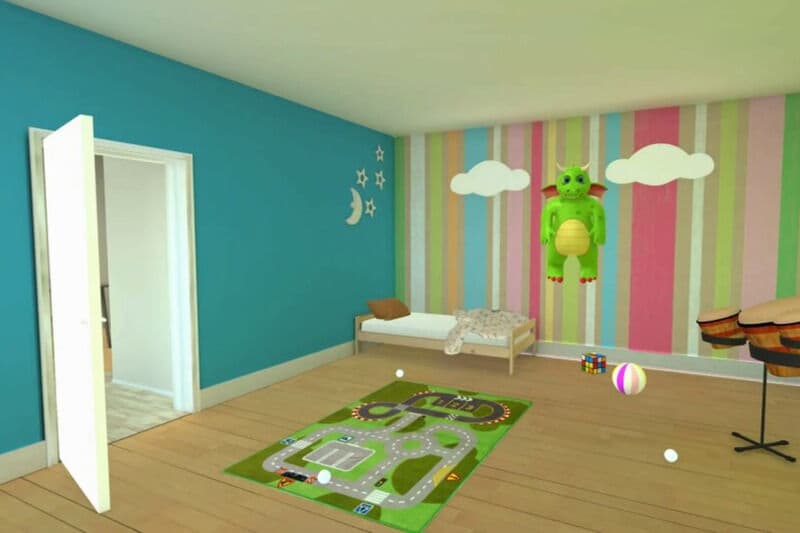
This VR eye-tracking game is being proposed as a way to help objectively help health administrators to diagnose ADHD amongst children to deliver a more effective approach to the notoriously difficult process. The game builds on the EPELI virtual reality (VR) game that was previously developed as a way to monitor the ADHD symptoms a person might be having. The diagnostic tool could work effectively as a way to track for patterns found in eye movements and works in combination with machine learning.
One of the original developers of EPELI Topi Siro spoke on the VR eye-tracking game saying, "The player has to remember the tasks despite distractions in the environment, such as a TV being on. The game measures everything: how much the child clicks on the controls and how efficiently they perform the tasks. Efficiency correlates with everyday functioning, whereas children with ADHD often have challenges."
Image Credit: Pelli Vision Oy
Why This Trend Is Growing
- Vr-powered ADHD Diagnosis
- Using VR and eye-tracking technology for objective ADHD diagnosis could disrupt traditional diagnostic methods.
- Machine Learning in Healthcare
- Utilizing machine learning in healthcare could lead to more accurate and efficient diagnoses for various conditions.
- Gamification of Healthcare
- The gamification of healthcare could provide more engaging and effective tools for diagnosis and treatment.
Industries Being Reshaped
- Healthcare
- The healthcare industry could benefit from VR and machine learning-based tools for diagnosing and treating conditions such as ADHD.
- Education
- The education industry could utilize VR-powered games to improve ADHD diagnosis and treatment in children.
- Technology
- The technology industry could continue to develop and refine VR and machine learning-based healthcare tools for various needs and conditions.