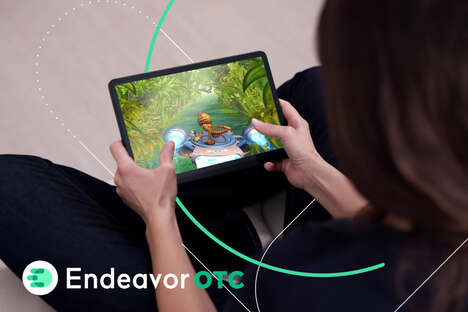
The team at Aalto University, the University of Helsinki, and Abo Akademi University work together to discover a new technology that they incorporate into the EPELI virtual reality game. It helps track the eye movements of children when they are playing video games and uses machine learning to understand quantifiable observations.
EPELI stands for Executive Performance in Everyday Living with the help of Topi Siro, a former researcher at Aalto. The game sets up an environment that replicates everyday life by asking players to complete simple tasks including eating a banana or brushing their teeth. As every round passes, the characters are distracted by elements such as the TV turning on with the goal to stay focused on fulfilling the goal.
Image Credit: EPELI
Key Themes Behind This Trend
- Cognitive Virtual Reality Games for Mental Health
- Incorporating machine learning and VR gaming can track eye movements to objectively diagnose and support mental health disorders.
- Gamifying Everyday Tasks for Cognitive Skills Development
- Virtual reality-based games that replicate everyday tasks with distractions can help improve cognitive skills and focus.
- Machine Learning for Early Detection of ADHD
- Using machine learning to quantitatively analyze eye movements during virtual reality games can be a powerful tool for early detection of ADHD.
Where This Applies
- Healthcare and Mental Health
- Medical professionals and mental health therapists can incorporate VR-based cognitive games and machine learning for early detection and treatment of mental health disorders.
- Education Technology
- Educational institutions can leverage VR-based cognitive games and machine learning to improve cognitive skills of students.
- Gaming and Entertainment
- The gaming industry can explore virtual reality games that gamify everyday tasks with distractions to improve skill development and cognitive performance.