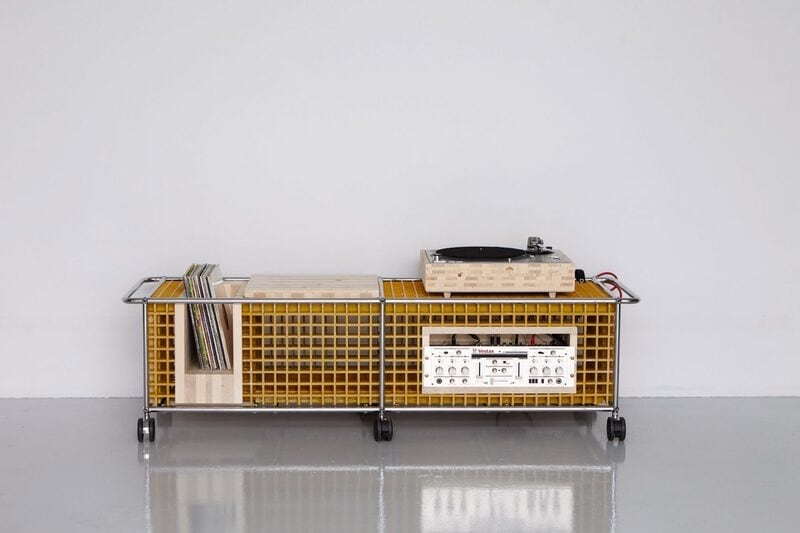
The USM Haller Re-Framed challenges designers to rethink how modular furniture can be reused, repurposed, and reconfigured over time. At Designers Saturday, the show features archive USM Haller components alongside new designs made by combining offcuts, vintage parts, and fresh modules. The pieces highlight the system’s flexibility so users can mix old and new without losing coherence.
Every installation in the exhibit demonstrates how functional furniture can double as a statement about sustainability. Tall storage units, bench-like platforms, and small tables are constructed using both polished steel elements and visibly worn finishes to show contrast. The exhibition reframes reuse not as an afterthought but as part of the design process from the start. It proposes that materials remembered and materials new can coexist in one system without compromise.
Image Credit: Birgit Fauske
Why This Trend Is Growing
- Modular Furniture Evolution
- Embracing modularity in furniture design allows for seamless integration of new and old components, encouraging sustainable practices through adaptability.
- Sustainable Design Integration
- The shift towards including sustainability as a core design principle revolutionizes how materials are selected, used, and reused in creative ways.
- Contrasting Material Aesthetics
- The deliberate contrast between new and vintage materials in furniture design creates a unique aesthetic that appeals to consumers interested in both eco-conscious and modern styles.
Industries Being Reshaped
- Furniture Manufacturing
- An industry poised to benefit from innovations in modular and sustainable design practices, offering opportunities for extending product lifecycles and reducing waste.
- Interior Design
- Designers in this industry can capitalize on the trend of combining contrasting materials and modular pieces to create dynamic and versatile interiors.
- Sustainable Materials
- This industry stands to gain from increased demand for sustainable and repurposed materials, driven by consumer interest in eco-friendly products.