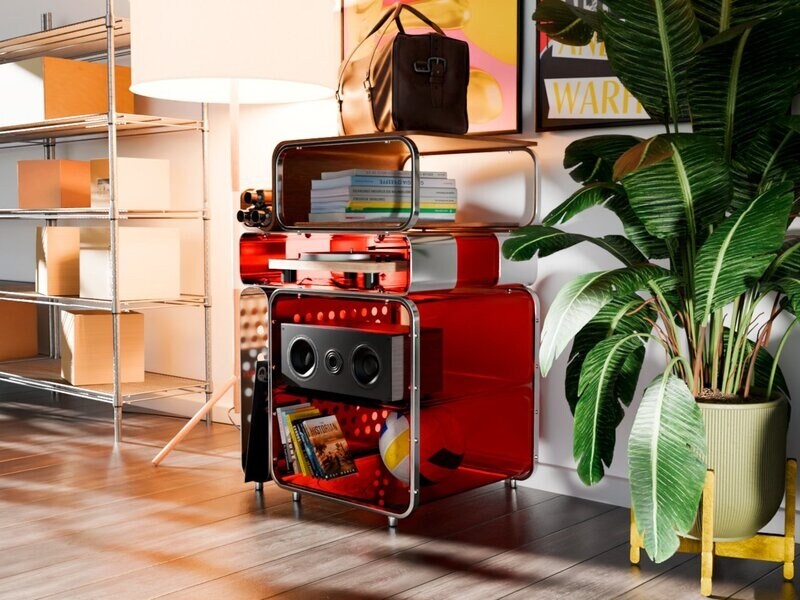
TUMBA introduces a new approach to flatpack furniture by replacing rigid construction with playful adaptability. The shelf system has a stackable assembly, using interlocking brackets and lightweight panels that snap together without tools or permanent fittings. Each element can be rearranged, expanded, or condensed according to changing space requirements, allowing users to redesign their furniture as easily as rearranging building blocks. The result challenges the limitations of traditional modular storage while maintaining simplicity and strength.
The visible joints become part of the visual language, celebrating construction rather than concealing it. Materials emphasize durability and circular use, ensuring that panels and connectors can be reused or replaced over time. Tumba reflects a broader shift in product design toward longevity, personalization, and freedom of form, transforming everyday storage into an evolving system that grows with its environment.
Image Credit: Evgeny Prokopchik
Key Themes Behind This Trend
- Modular Adaptability
- The development of a reconfigurable shelving system highlights the growing trend towards adaptable furniture that evolves alongside user needs and spatial changes.
- Visible Joints Aesthetic
- The emphasis on visible joints as a design feature underscores a trend where construction elements become a celebrated part of an item’s aesthetic, moving away from traditional concealment.
- Circular Material Use
- The focus on durable, reusable materials reflects a trend in product design prioritizing sustainability and circular usage, aiming to extend product lifecycles.
Where This Applies
- Furniture Manufacturing
- Shifting toward adaptive shelving solutions presents disruptive innovation opportunities in the furniture industry by catering to consumer demand for customizable and versatile home fixtures.
- Interior Design
- Interior designers are increasingly tapping into modular, stackable systems that allow for more flexibility and personalization in creating dynamic living spaces.
- Sustainable Materials
- A focus on circular and reusable materials opens new opportunities within the sustainable materials industry, driving advancements in environmentally friendly product offerings.