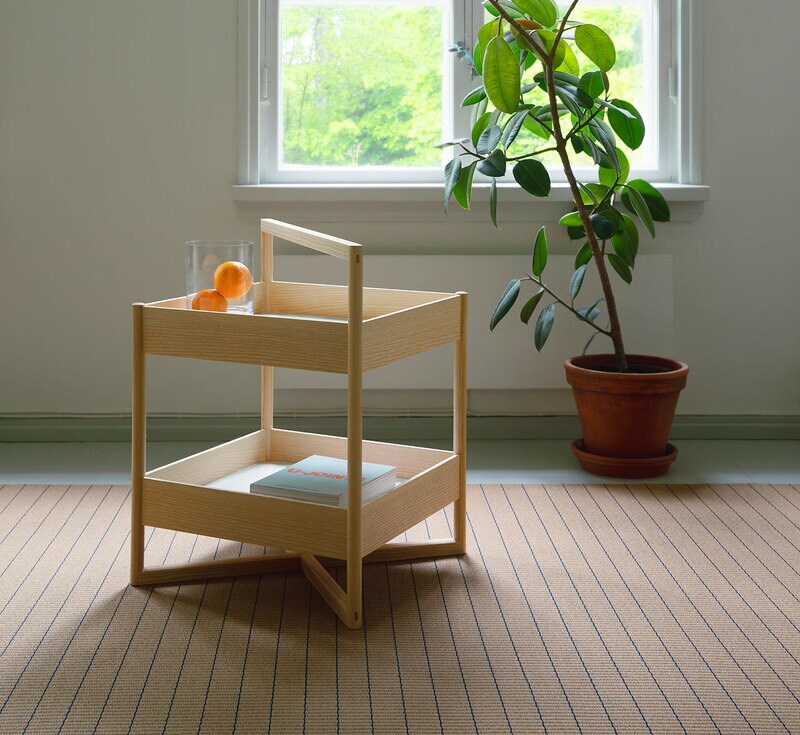
The Taso Tray Table by Cecilie Manz for Frame furnishes spaces with a modular and flexible mindset. Its thin, ornamental steel frame supports a round tray top that can be shifted or lifted to serve as a table, surface, or pedestal. The design explores the poise between readability and abstraction, giving the tray a visual lightness even when in use. Behind its minimal silhouette, the piece asks how furniture can subtly thread functions across zones.
Crafted in powder-coated steel with refinements in finish and proportion, the Taso integrates into residential or commercial settings without dominating them. Whether beside a lounge chair, in a dining layout, or as a standalone accent, the piece presents graceful utility. Its ease of movement and quiet presence suggest a philosophy of gentle adaptability, furniture that shifts, rather than insisting.
Image Credit: Nikari
What Makes This Trend Stand Out
- Modular Furniture Design
- Modular furniture like the Taso Tray Table encourages adaptable living spaces, offering opportunities for customization in small footprint environments.
- Minimalist Aesthetic Integration
- Furniture pieces that seamlessly blend into various interior themes can innovate the concept of functional elegance across home and office settings.
- Multi-functional Home Decor
- The rise of multi-functional decor items promotes efficiency and utility, appealing to consumers seeking maximum value and versatility from each item.
Sectors Adopting This
- Interior Design
- Incorporating flexible furniture designs introduces new possibilities for creating spaces that evolve with user needs and aesthetic preferences.
- Furniture Manufacturing
- The production of adaptable furniture items demands innovative approaches in materials and design to achieve both functionality and visual appeal.
- Commercial Real Estate
- Spaces outfitted with versatile furniture can offer attractive, dynamic environments that cater to diverse business operational needs.