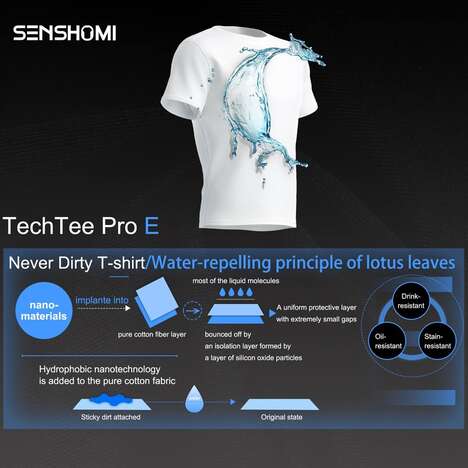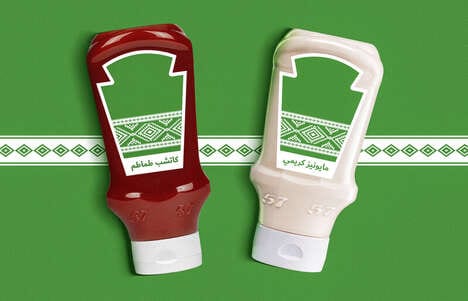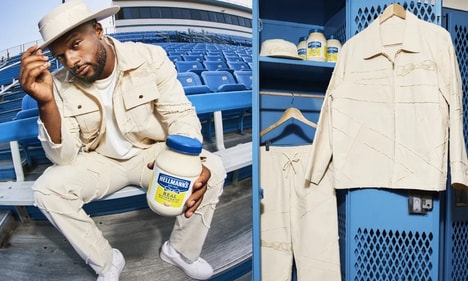
It only takes one splash from a colorful condiment to completely ruin an outfit but Heinz wants to help people eat without fear and it is providing a solution to this issue with the Unstainable Thobe. Created in collaboration with advertising agency Wunderman Thompson Dubai, this traditional robe integrates a high-protective barrier to repel stains. Specifically, Heinz implemented a protective coating formed by nanotechnology so that the garment's fibers will remain unaltered by mishaps.
In fact, the water-resistant material is made up of millions of silicone nano-filaments so that the garment can actually be soaked in a tub full of water and still come out dry. As such, in the case of a ketchup spill, only a damp cloth is needed to keep the white robe looking pristine.
What's Driving This Trend
- Nanotechnology-coated Fabrics
- There is an opportunity to innovate through the development of more garments which adopt nanotechnology coating technology to protect garments from stains.
- Wearable Protection Technology
- The development of wearables integrated with protective barriers to repel stains would provide a new level of protection for clothing.
- Sustainability in Fashion
- There is an opportunity to increase sustainability in fashion by creating garments that are resistant to stains and do not require frequent washing.
Who This Affects Most
- Food and Beverage
- Companies in the food and beverage industry could benefit from partnerships with clothing companies to create branded stain-resistant garments to promote their products.
- Fashion and Apparel
- The fashion and apparel industry has an opportunity to adopt nanotechnology coatings in their fabrics to create high-performance stain-resistant garments.
- Healthcare and Hospitality
- The healthcare and hospitality industry could benefit from incorporating wearable stain-resistant technology in employees' uniforms to improve hygiene and appearance standards.