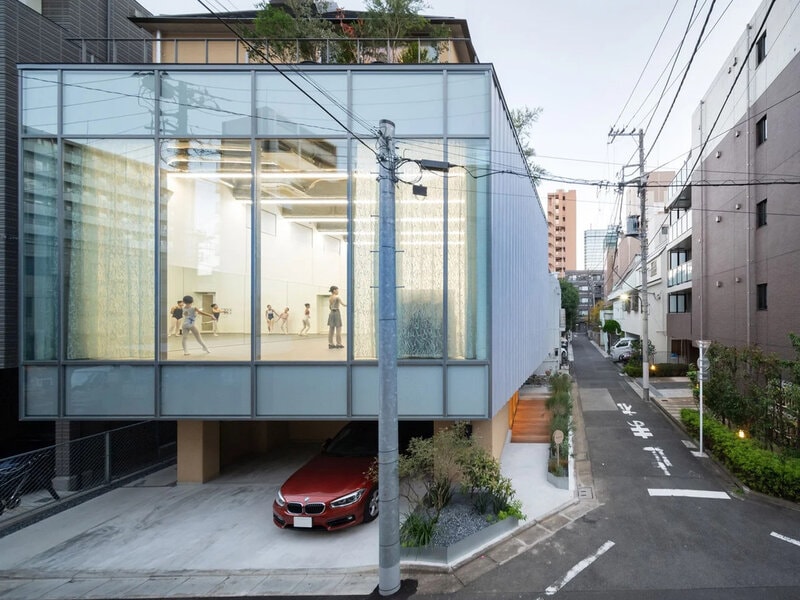
The Tokyo Ballet House is a mixed-use residence and ballet studio designed by Kenta SANO & Associates in Tokyo's Komagome neighborhood. Completed in 2024, the four-story steel building combines a private home with a dedicated dance studio while incorporating planted terraces and open voids that reconnect the site with the area's diminishing urban greenery. Organized as two offset volumes, the lower floors accommodate a garage and support spaces, while the ballet studio features a 4.2-meter ceiling height to support professional dance training.
The upper residential level is wrapped by a perimeter terrace beneath a sculptural sloped roof shaped by local setback regulations. A north-facing glazed facade transforms the ballet studio into a stage that opens toward the surrounding neighborhood, allowing the city itself to serve as a visual backdrop for performances.
Image Credit: Kenta Sano & Associates
What's Driving This Trend
- Hybrid Live-work Arts Spaces
- Mixed-use residential buildings that integrate professional creative facilities present new models for monetizing private property through education, rehearsal, and community programming.
- Urban Green Infill Architecture
- Planted terraces, open voids, and greenery-focused layouts introduce opportunities for compact city buildings to restore ecological value while improving occupant wellness.
- Neighborhood-facing Performance Design
- Glazed studio facades and visually open creative spaces turn everyday buildings into cultural interfaces that blur the boundary between private practice and public engagement.
Who This Affects Most
- Residential Real Estate
- Homes designed with specialized commercial-grade amenities create differentiated property formats for buyers seeking income potential, lifestyle integration, and flexible use.
- Architecture and Design
- Regulation-shaped roofs, offset volumes, and site-responsive voids highlight how urban constraints can inspire distinctive spatial experiences and new typologies.
- Performing Arts Education
- Purpose-built studios embedded within residences expand access to high-quality training environments while supporting smaller-scale, neighborhood-based arts instruction.