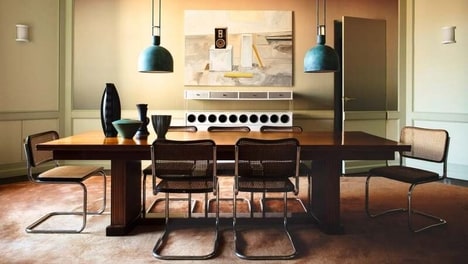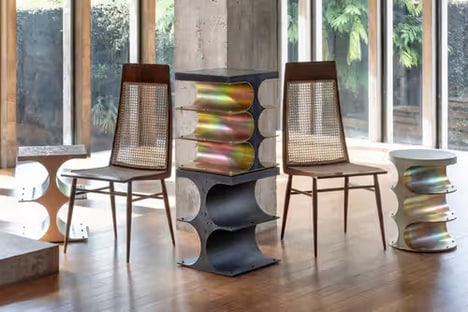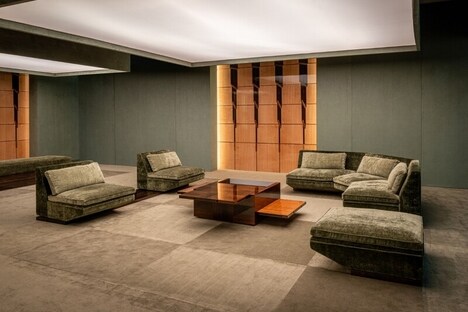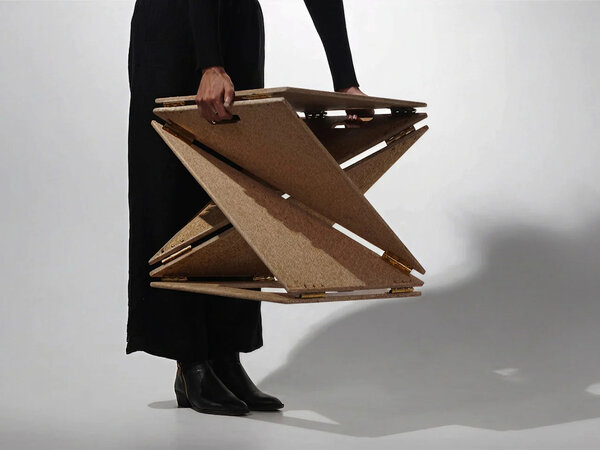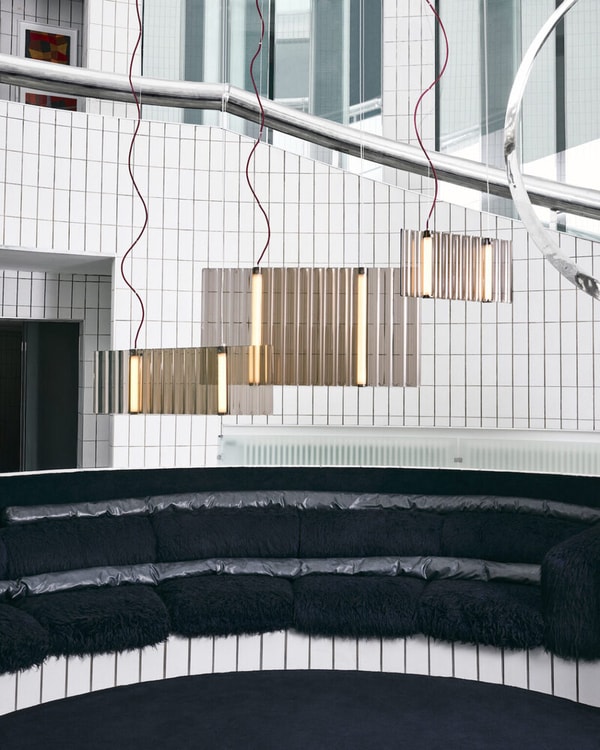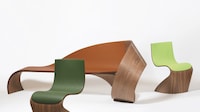
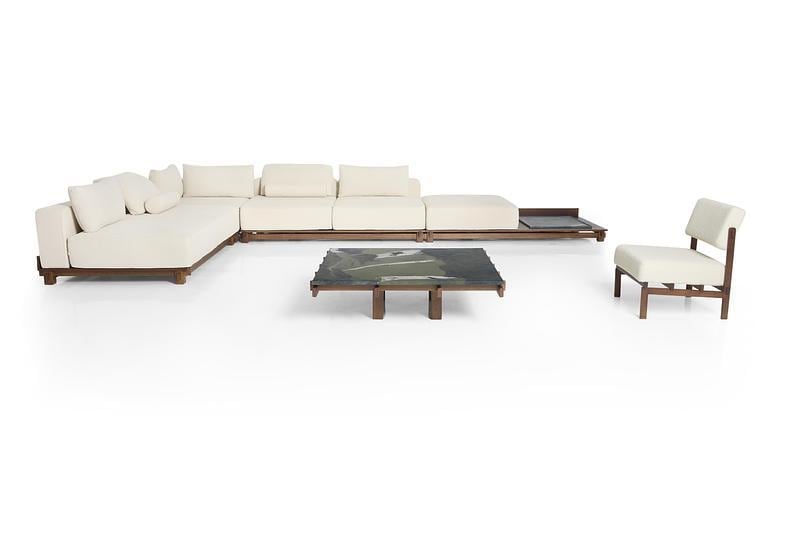
Triptyque, the French-Brazilian architecture and urbanism agency, has designed the Assemblage Collection for the Brazilian brand Breton. This furniture line was conceived as a constructive exploration that questions the logics of support and span in wood.
Triptyque's Assemblage Collection draws inspiration from architectures of large spans, including the cantilever, clear span, megastructure, and structural grid. It translates these grand architectural figures into a domestic scale through a subtle play between balance and tension, where each piece becomes a staging of gravity and a reflection on the art of building.
For individuals who value original Brazilian design and sustainable practices, Breton's commitment as a B Corporation and its carbon-negative status, verified by the GHG Protocol, add significant appeal.
Image Credit: Breton
What's Driving This Trend
- Architectural Furniture
- Large-span engineering concepts adapted for domestic interiors reveal white-space for collectible furniture that merges structural experimentation with everyday function.
- Carbon-negative Design
- Verified sustainability credentials are becoming a premium differentiator as consumers seek home products that combine refined aesthetics with measurable climate benefits.
- Constructive Minimalism
- Furniture that exposes balance, tension, and support systems signals demand for pieces where engineering logic becomes part of the visual identity.
Who This Affects Most
- Luxury Furniture
- High-end brands can distinguish collections through sculptural construction, regional design heritage, and sustainability proof points that elevate perceived value.
- Interior Design
- Residential and hospitality spaces gain new creative possibilities from furniture that behaves as both functional object and architectural statement.
- Sustainable Manufacturing
- Carbon-negative production models and certified environmental reporting are reshaping how material-intensive industries compete on trust, transparency, and design quality.