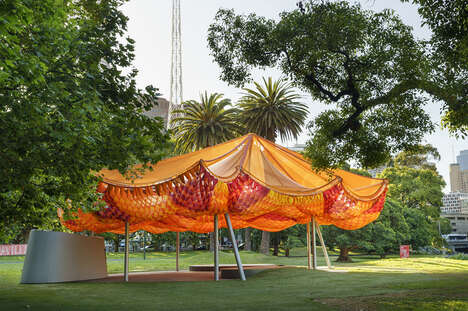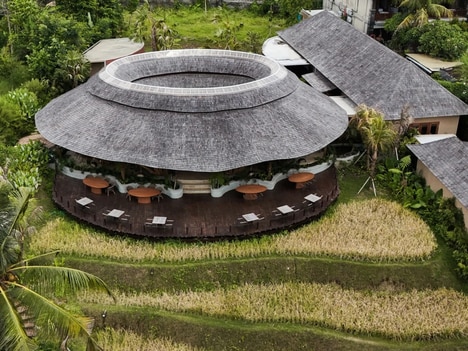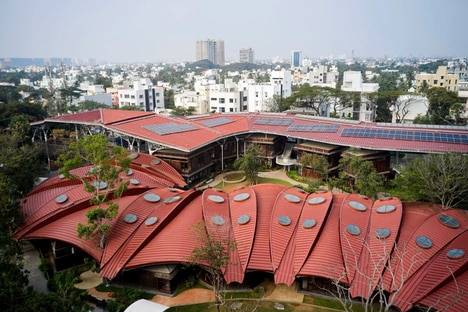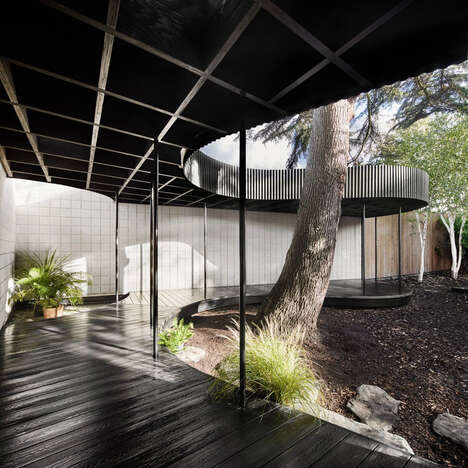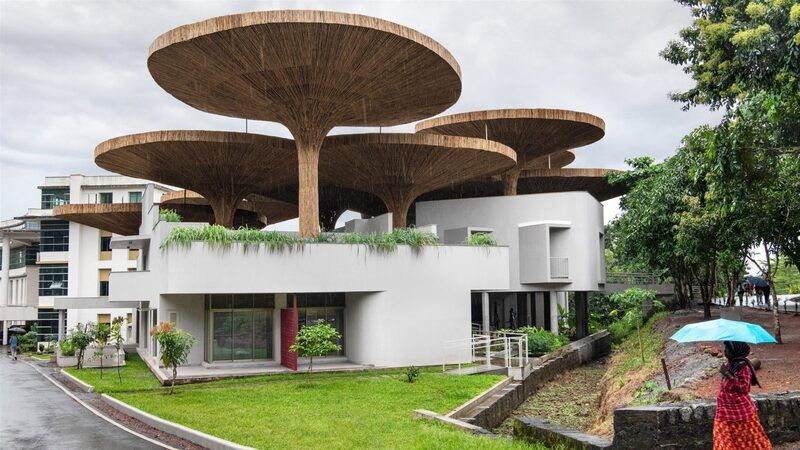
Local design firm The Purple Ink Studio has taken on a unique design challenge by approaching academic buildings and it has covered the Tapmi Center in India with a canopy. This structure is comprised of parasols which are clad in bamboo -- it forms a shelter over the business school's social hub. This extension is on a part of campus which is set against plenty of lush forest valleys.
It is comprised of two white buildings which section into wings. The principal of The Purple Ink Studio, Nishita Bhatia shares, "The campus already hosts several academic buildings, but these often follow a conventional, closed design. They are rigid blocks that, while functional, fail to engage with their surroundings or the students in a meaningful way. Our approach was to break away from this norm."
Image Credit: Suryan//Dang
What Makes This Trend Stand Out
- Sustainable Architectural Design
- The use of bamboo in creating eco-friendly canopies presents a sustainable alternative to conventional building materials, emphasizing nature-integrated designs.
- Adaptive Campus Spaces
- Introducing flexible, open-air structures on campuses promotes dynamic interaction among students, challenging the traditional norms of confined academic environments.
- Nature-inspired Aesthetics
- Incorporating elements like parasols and bamboo integrates nature into architectural aesthetics, offering a harmonious blend of functionality and natural beauty.
Sectors Adopting This
- Architectural Design
- Innovations in material usage such as bamboo provide opportunities for eco-conscious design solutions that merge aesthetics with environmental responsibility.
- Higher Education
- Reimagining campus architecture to include open and engaging spaces can reshape student experiences, fostering creativity and collaboration.
- Sustainable Materials
- The demand for eco-friendly construction materials is on the rise, creating avenues for materials like bamboo to gain traction in the industry.