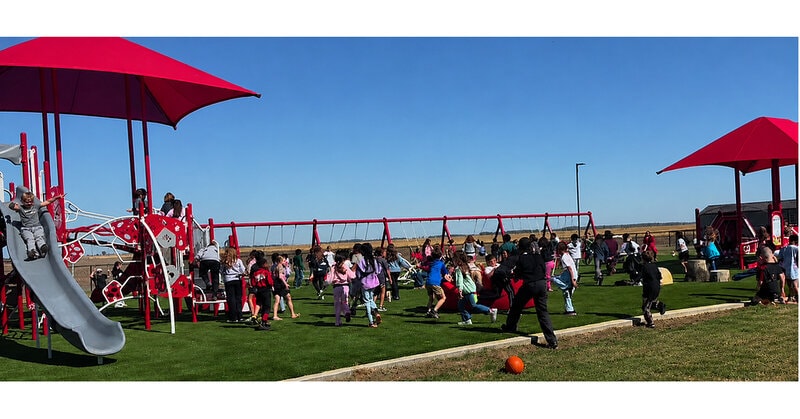
Rivercrest Elementary School in Arkansas has introduced student-designed inclusive playgrounds through a new $507,000 recreational space that accommodates children with different physical and sensory needs. Unlike conventional playgrounds, the project incorporates student feedback to create an environment where accessibility, social interaction, and individual preferences shape the play experience.
Students participated in surveys and grade-level discussions to help select equipment and features. The completed playground includes wheelchair-accessible structures, adaptive swings, sensory pods, reading nooks, and a merry-go-round designed for different mobility requirements. Cypress Creek Energy contributed $400,000, with additional funding from Ag for Autism and public sources.
For Rivercrest School District, the playground supports student well-being and encourages participation across different abilities. The project also strengthens Cypress Creek Energy's community relationships while demonstrating how partnerships between schools and businesses can fund accessible educational spaces.
Image Credit: Cypress Creek Energy
What Makes This Trend Stand Out
- Student-led Inclusive Design
- Participatory planning models are reshaping school environments by embedding children’s lived experiences into accessibility-focused infrastructure decisions.
- Sensory-friendly Play Spaces
- Playgrounds with adaptive equipment, quiet zones, and tactile features reflect growing demand for environments that support diverse sensory and mobility needs.
- Corporate-funded Community Amenities
- Business-backed investments in public school recreation areas highlight new partnership models linking social impact, brand trust, and local infrastructure gaps.
Sectors Adopting This
- Education
- Schools are becoming testbeds for inclusive design strategies that improve student well-being, participation, and equitable access to shared spaces.
- Playground Equipment
- Manufacturers can differentiate through adaptive, modular, and sensory-responsive products that serve a wider range of physical and developmental needs.
- Corporate Social Responsibility
- Community investment programs gain relevance when funding visible, high-impact accessibility projects that align corporate presence with local quality-of-life improvements.