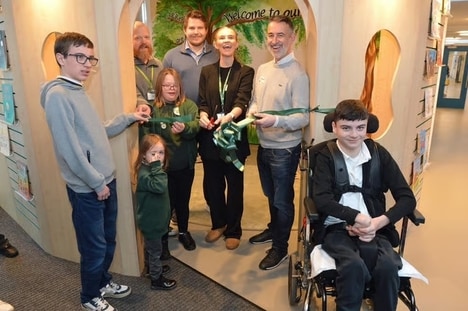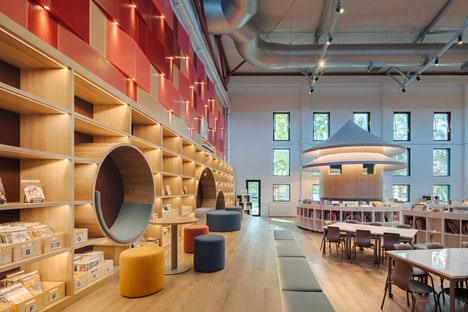
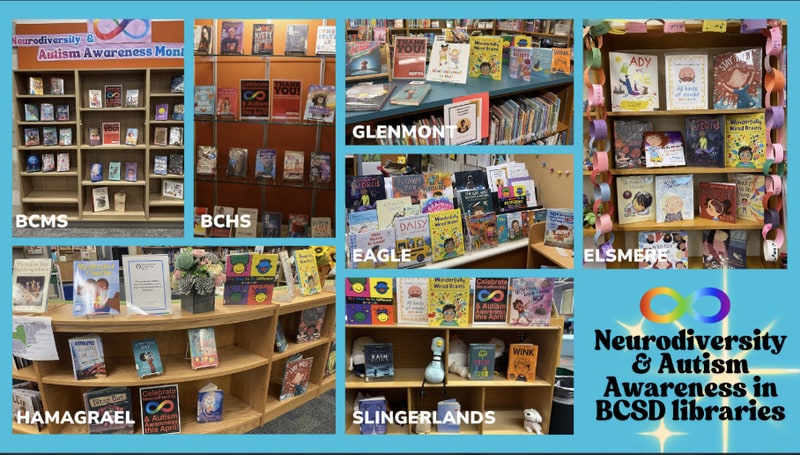
The Bethlehem Central School District has introduced Neurodiversity and Autism Awareness nooks within its school libraries. This development features curated book displays that include age-appropriate fiction, nonfiction, biographies, and picture books from autistic authors and other storytellers who write from informed perspectives on topics such as friendship, communication, sensory experiences, and the strengths and challenges of being neurodivergent.
The Bethlehem Central School District's service innovation was supported by the Special Education PTA, which donated two books per school and helped expand the displays into the broader community through partnerships with the Bethlehem Public Library and the Delmar bookstore I Love Books.
The Neurodiversity and Autism Awareness nooks transform the school library from a neutral collection of books into an active tool for social understanding and inclusion by helping students of all neurotypes see themselves reflected in literature while teaching neurotypical children to appreciate rather than fear differences.
Image Credit: Bethlehem Central School District
What Makes This Trend Stand Out
- Neurodiversity-centered Curation
- An emerging library curation model that foregrounds autistic authors and neurodivergent perspectives, creating demand for specialized metadata, adaptive shelving strategies, and recommendation algorithms tailored to diverse sensory and reading needs.
- Inclusive Educational Spaces
- A shift toward purpose-built nooks and sensory-aware environments within schools, reframing physical learning spaces as tools for social inclusion and personalized student engagement.
- Community-public Partnership Networks
- A collaborative ecosystem between schools, public libraries, PTAs, and local bookstores that broadens distribution channels for niche content and supports shared programming and resource pooling.
Sectors Adopting This
- Education-technology
- Adaptive learning platforms and recommendation engines that integrate neurodiversity-focused taxonomies and sensory-readiness indicators represent a new product category for personalized literacy experiences.
- Publishing-and-media
- Publishers and content creators who prioritize authentic neurodivergent voices and accessible formats are positioned to redefine genre categorizations and inclusive marketing strategies.
- Retail-bookstores-and-libraries
- Physical and digital retail channels that curate dedicated neurodiversity collections signal an opportunity for differentiated in-store experiences, programming bundles, and partnership-driven inventory models.