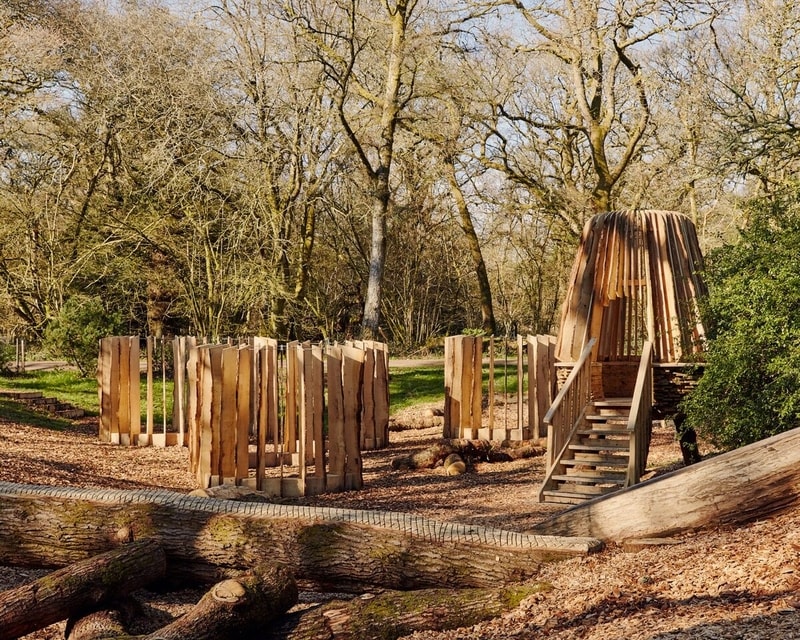
Pearce+, Invisible Studio, and Lean Structures have completed the Silk Wood Playscape within the ancient Silk Wood area of Westonbirt Arboretum in Gloucestershire. Positioned inside a former stone quarry, the project uses the site's sloping terrain to create an informal network of play elements integrated into the woodland landscape. Rather than relying on conventional playground equipment, the design combines purpose-built structures with strategically placed logs, bridges, scrambles, and a hollow-trunk slide. The team used green oak sourced directly from the arboretum, allowing the playscape to feel closely connected to its surroundings.
A series of curved hide-and-seek walls constructed from vertical timber fins forms the center of the site, accompanied by a cone-shaped lookout tower elevated on three tree-trunk supports. Bark, knots, bends, and other natural irregularities were intentionally retained throughout the structures, celebrating the character of the material rather than concealing it. Timber offcuts were also incorporated into the tower, where small gaps provide habitat opportunities for birds and insects.
Image Credit: Joseph Horton
What's Driving This Trend
- Biophilic Play Design
- Designs that embed play elements within existing woodland fabric and preserve natural material character open opportunities for play areas that prioritize ecological integration and sensory-rich experiences.
- Upcycled Timber Architecture
- Materials reclaimed or milled from-site, with bark and knots retained, enable structures that foreground material story and reduce embodied carbon compared with conventional manufactured components.
- Topography-led Playscapes
- Using slopes, quarried hollows, and natural landforms as primary organizing features encourages landscape-first play environments that minimize earthmoving and create varied, discoverable routes.
Who This Affects Most
- Landscape Architecture
- Landscape practices that combine ecological stewardship with play design can deliver multifunctional sites that support biodiversity while offering informal recreational infrastructure.
- Play Equipment Manufacturing
- Manufacturers exploring modular timber components and hollowed natural forms can tap demand for products that read as landscape artifacts rather than branded plastic fixtures.
- Conservation Tourism
- Nature-focused visitor attractions that integrate low-impact interpretive play features may attract families seeking immersive outdoor experiences with conservation narratives.