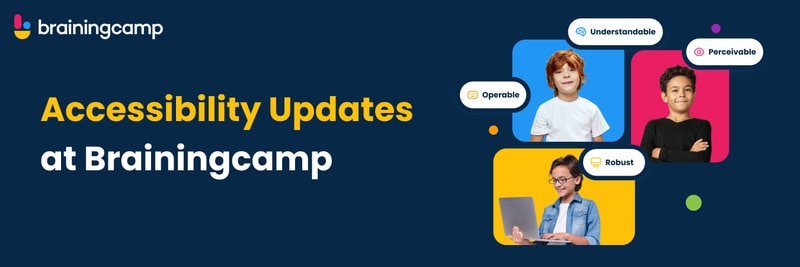
Brainingcamp, a provider of digital math manipulatives, has announced significant accessibility upgrades across its entire suite of 18 interactive tools. The move aligns with WCAG 2.2 AA standards to ensure students with visual, auditory, motor, and cognitive disabilities can engage meaningfully with math concepts.
Brainingcamp's enhancements include robust support for screen readers, keyboard navigation, and other assistive technologies to address the limitations of physical manipulatives that can be rigid and less adaptable for students with diverse learning needs. By embedding these accessible manipulatives, curriculum publishers and edtech providers can accelerate product development while reducing compliance risk and delivering inclusive math experiences at scale.
Brainingcamp's updates also improve visual clarity, color contrast, and overall usability for all learners, and each manipulative is now available in English, Spanish, and French to support English Language Learners and expand global access.
Image Credit: Brainingcamp
What Makes This Trend Stand Out
- Accessible Digital Manipulatives
- Screen-reader compatibility and keyboard navigation transform physical-only math tools into universally usable digital resources that broaden classroom inclusion.
- Multilingual Edtech Platforms
- Availability in English, Spanish, and French extends reach into multilingual classrooms and supports global adoption of standardized learning tools.
- Inclusive UX Standards Adoption
- Alignment with WCAG 2.2 AA and improved visual clarity positions user experience compliance as a core differentiator in educational product design.
Sectors Adopting This
- K-12 Curriculum Publishing
- Embedding accessible interactive manipulatives into curricula produces compliant, adaptable instructional packages that appeal to districts prioritizing equity.
- Educational Software Development
- Platform upgrades focused on assistive technologies create opportunities for software vendors to deliver modular, accessibility-first learning ecosystems.
- Assistive Technology Hardware
- Enhanced software support for screen readers and keyboard navigation drives demand for complementary hardware optimized for tactile, auditory, and motor accessibility.