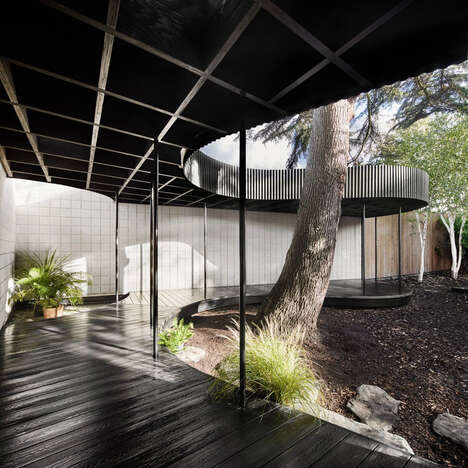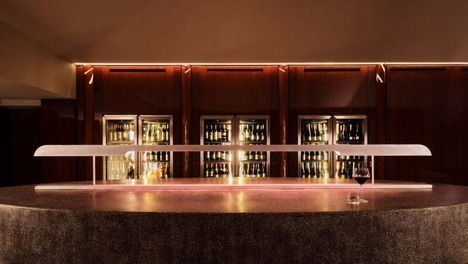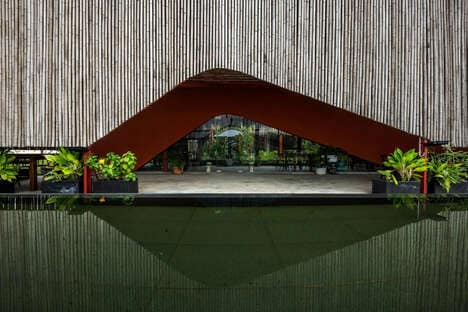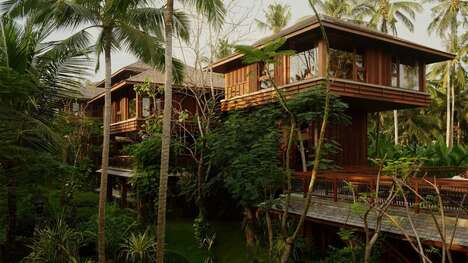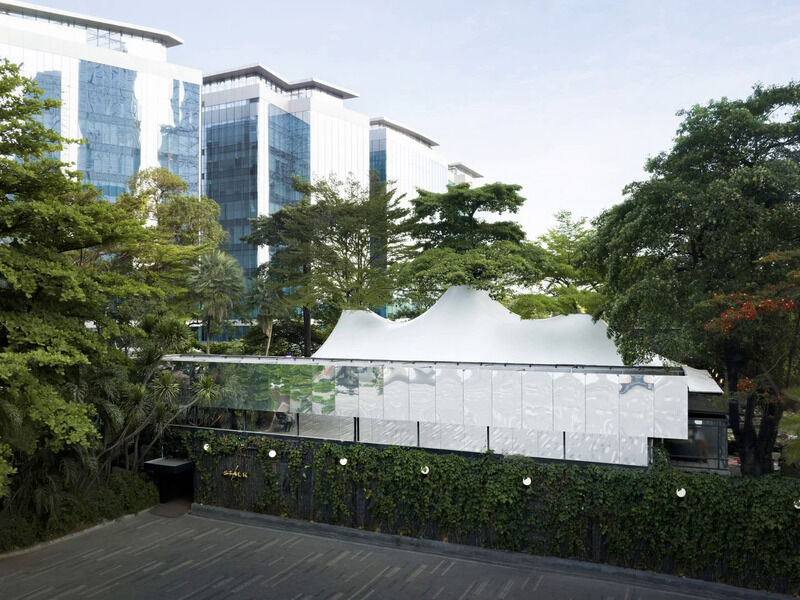
The Stalk Tree-Hugger is a captivating bar and restaurant space nestled in the Jakarta business district. It is designed by the team at RAD+ar and it is embraced by the tall trees in the area, five in particular. The space is also built so that it has a parametric fabric to form a mesmerizing dynamic play of light and shadows which support the commercial activities.
The project brings attention to the unique spatial experience whilst maintaining a simple design. The Stalk Tree-Hugger is meant to evoke a seamless harmony with the greenery that it is surrounded by. IT is comprised of a restaurant and lounge, which is protected by the shifting shadows of trees to create an intimate ambiance.
Image Credit: RAD+ar
What's Driving This Trend
- Tree-integrated Architecture
- Designing structures that seamlessly blend with natural surroundings presents opportunities for eco-friendly urban development.
- Parametric Design Environments
- Utilizing advanced parametric design techniques creates dynamic spaces that transform how customers interact with their environments.
- Ambient Light Manipulation
- Integrating natural and architectural elements to control light and shadow offers novel ways to enhance the customer experience in hospitality settings.
- Eco-conscious Leisure Spaces
- The incorporation of environmental elements in hospitality venues provides a unique selling point for businesses seeking sustainable attraction models.
Who This Affects Most
- Hospitality
- The hospitality industry is witnessing a shift towards sustainability with venues integrating natural elements into their design.
- Urban Planning
- Urban planning increasingly incorporates biophilic design, emphasizing harmony between built environments and nature.
- Architecture
- Architecture firms are exploring innovative design strategies that fuse technology with natural aesthetics.